





Table of Contents
In an era defined by increasing climate volatility and unpredictable natural phenomena, the global landscape of emergency management is undergoing a radical transformation. From catastrophic floods and wildfires to devastating earthquakes, the frequency and intensity of disasters have forced national governments and international NGOs to rethink their logistics and infrastructure strategies. At the heart of this shift is a move away from flimsy, short-term solutions toward robust, scalable, and reusable technology. This is why governments worldwide are increasingly stockpiling folding container houses for emergency situations.
Traditional disaster relief often relied on canvas tents or makeshift shelters. While portable, these options fail to provide the security, insulation, and durability required for long-term recovery phases. Enter the rapid response modular units: a breakthrough in engineering that combines the structural integrity of a permanent building with the mobility of a shipping container.
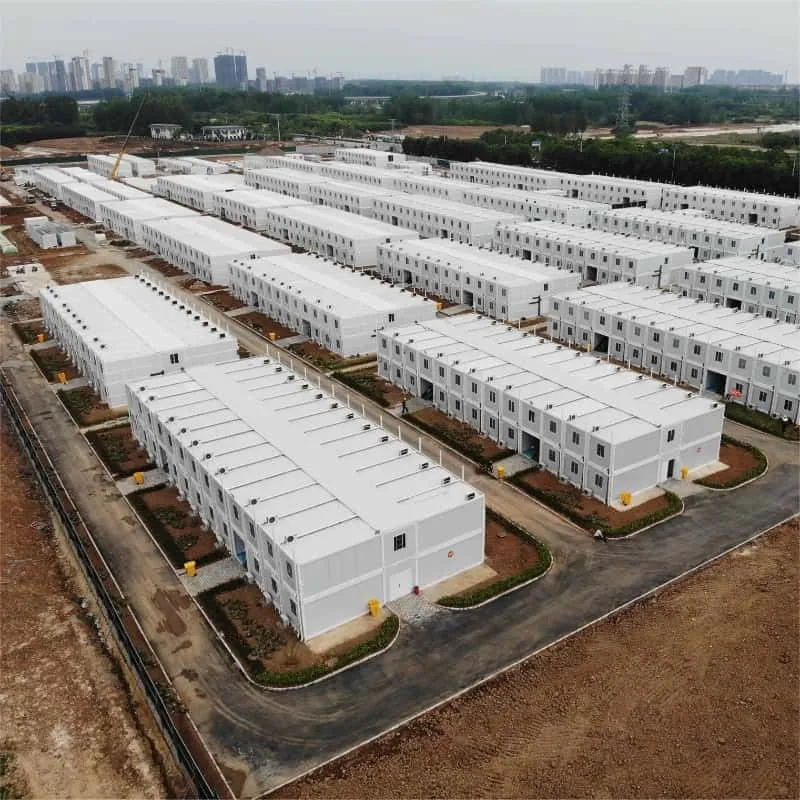

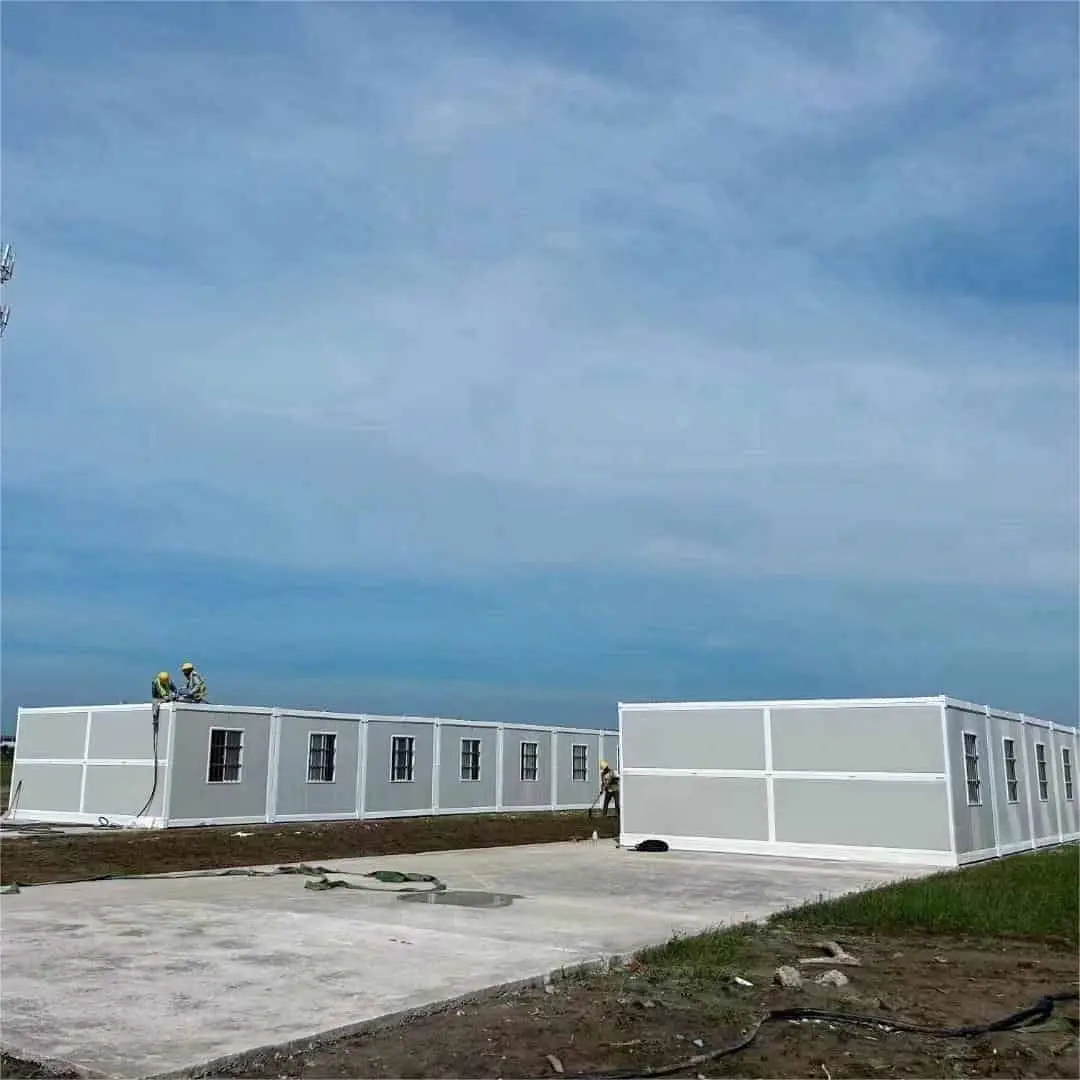
The Evolution of Emergency Shelter: From Tents to Modular Units
Historically, the primary goal of disaster relief was immediate survival. Tents were the gold standard because they could be flown in by the thousands. However, as the “temporary” nature of displacement often stretches into months or even years, the limitations of soft-shell shelters become glaring. They offer poor protection against extreme temperatures, lack privacy, and are easily destroyed by high winds.
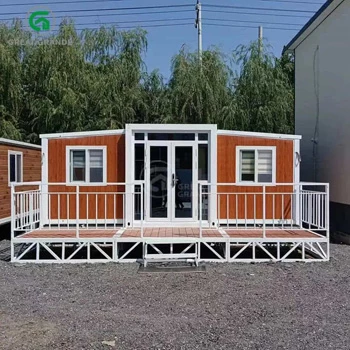
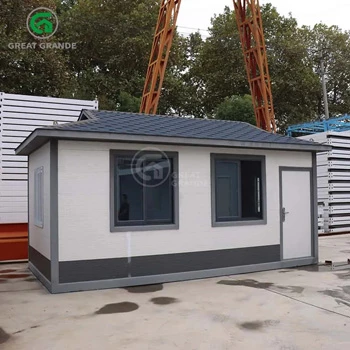
Governments have realized that disaster relief housing must serve as a bridge to permanent reconstruction. The folding container house represents this evolution. These units are constructed from high-strength galvanized steel frames and fireproof sandwich panels, providing a level of safety that was previously unattainable in rapid-deployment scenarios.
Key Benefits of Folding Technology
- Deployment Speed: A standard folding container can be expanded and fully functional in less than 10 minutes.
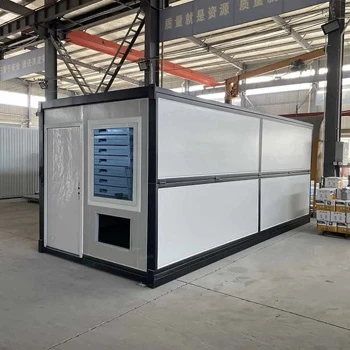
- Logistical Efficiency: Because they fold flat, a single truck can transport up to 10 to 12 units simultaneously, compared to just one or two pre-assembled units.
- Durability: Designed to withstand seismic activities and heavy snow loads, these units offer a “home-like” security that aids in the psychological recovery of survivors.
Strategic Stockpiling: The Logic of Preparedness
The concept of “Stockpiling” has become a central pillar of national security. Governments are no longer waiting for a disaster to strike before procuring equipment; they are building massive reserves of rapid response modular units in strategic hubs.
1. Minimizing the “Golden Hour” Delay
In disaster management, the first 72 hours are critical. If a government already has thousands of folding container houses for emergency use sitting in regional warehouses, they can begin erecting semi-permanent villages within hours of a strike. This proactive approach saves lives by providing immediate clinical space, command centers, and housing.
2. Economic Resilience and Cost-Efficiency
While the upfront cost of a folding container is higher than a tent, the lifecycle cost is significantly lower. These units are designed for multiple deployments. After a crisis subsides, they can be folded back down, sanitized, and stored for the next event. This reusability makes them an environmentally sustainable and fiscally responsible choice for public spending.
3. Versatility of Application
Governments aren’t just using these for housing. The modular nature of these units allows them to be configured as:
- Mobile Medical Clinics: Sterile environments for emergency surgeries and vaccinations.
- Administrative Command Posts: Equipped with satellite communication and power for emergency personnel.
- Sanitation Blocks: Modular toilets and shower units to prevent the spread of waterborne diseases.
Technical Superiority of Modern Folding Containers
When we analyze the specific needs of disaster relief housing, the technical specifications of companies like Grande Folding Container House reveal why these products are winning government contracts.
Structural Integrity
The frame of a premium folding container is typically made of hot-dip galvanized steel. This prevents rust, even in humid or coastal disaster zones. The wall panels use High-Density Rockwool or EPS (Expanded Polystyrene) insulation, which keeps the interior cool in tropical heat and warm in sub-zero winters.
Rapid Assembly Mechanism
The “folding” magic lies in the precision hinges. These are engineered to ensure that the structure remains airtight and watertight once unfolded. Most modern units do not require specialized heavy machinery for setup; a simple crane or even a group of trained personnel can lock the roof and walls into place, making them true rapid response modular units.
The Humanitarian Impact: Dignity in Displacement
Beyond the logistics and the steel, there is a human element to this shift. Being forced from one’s home is a traumatic experience. Residing in a tent for six months compounds that trauma. Folding container houses for emergency use provide a lockable door, solid walls, and the ability to integrate electricity and HVAC systems.
Providing high-quality disaster relief housing is about more than just shelter; it is about restoring dignity. When families have a private, secure space that resembles a real room, children sleep better, families feel safer, and the community recovery process accelerates.
Future-Proofing Nations with Modular Infrastructure
As urbanization increases, the impact of disasters in densely populated areas becomes more complex. Modular construction offers a way to rebuild “up” rather than just “out.” Many folding units are designed to be stackable, allowing for two-story temporary complexes in areas where land is scarce.
Furthermore, the integration of green technology—such as solar-ready roofing and rainwater harvesting attachments—means that these stockpiled units can operate off-grid, a necessity when local infrastructure has been decimated.
Conclusion
The transition toward stockpiling folding container houses for emergency situations is a clear indicator of how governments are prioritizing resilience. By investing in rapid response modular units, authorities are ensuring that they can provide high-quality, durable, and dignified disaster relief housing at a moment’s notice.
For organizations looking to enhance their disaster preparedness kits, exploring the range of folding container house products is the first step toward building a more resilient future. The ability to deploy a city in a day is no longer a dream of science fiction—it is a logistical reality that is saving lives across the globe.
FAQ
1. How long does it actually take to set up a folding container house during a disaster?
One of the primary reasons they are classified as rapid response modular units is their speed. A standard 20ft folding container house can be unfolded and secured by a team of 3-4 people in approximately 4 to 10 minutes. This includes locking the wall panels and ensuring the roof is fixed, making it significantly faster than traditional prefab buildings or complex tent setups.
2. Can these folding houses be reused after the disaster relief period is over?
Yes, absolutely. Unlike tents which degrade quickly, these units are built from industrial-grade steel and composite materials. Once the emergency housing phase is complete, the units can be cleaned, folded back into their compact 45cm-thick state, and transported back to a warehouse for stockpiling. Their lifespan typically exceeds 15-20 years with proper maintenance.
3. Are folding container houses for emergency use suitable for extreme weather conditions?
Yes. Quality disaster relief housing is engineered for versatility. They are designed to handle wind speeds of up to Grade 10-11 and have floor loading capacities suitable for heavy equipment. The insulated sandwich panels provide excellent thermal resistance, making them habitable in both scorching desert heat and freezing mountainous terrain, providing a much higher level of protection than fabric-based shelters.