





Table of Contents
In the fast-paced world of modern infrastructure, the efficiency of construction site housing often dictates the success of a project. As project timelines shrink and the demand for high-quality modular workforce accommodation grows, two primary contenders have emerged in the prefabricated sector: the Folding Container House and the Flat-Pack Container House.
But when it comes down to the wire—folding container house vs flatpack—which one truly wins for your specific job site? This comprehensive guide dives deep into the technical specifications, logistical advantages, and cost-efficiency of both solutions to help you make an informed investment.
The Evolution of Job-Site Housing: Why Modular?
Traditional brick-and-mortar or temporary wooden shacks are no longer viable for modern industries. Today’s project managers require housing that is:
- Rapidly Deployable: Ready to house workers within days, not months.
- Sustainable: Minimizing on-site waste and carbon footprint.
- Scalable: Easy to expand or contract based on the workforce size.
Modular solutions, specifically container-based designs, fulfill all these criteria. However, the choice between folding and flat-pack configurations remains a critical strategic decision.
Deep Dive: The Folding Container House
The folding container house is often hailed as the “speed king” of modular construction. This innovation is designed for extreme efficiency, particularly in remote locations or during emergency response scenarios.
Mechanics and Deployment
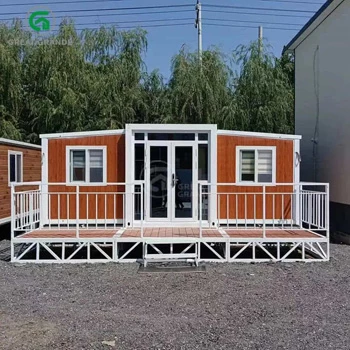
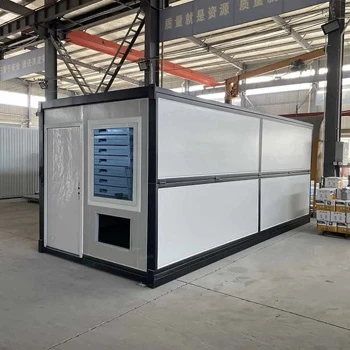
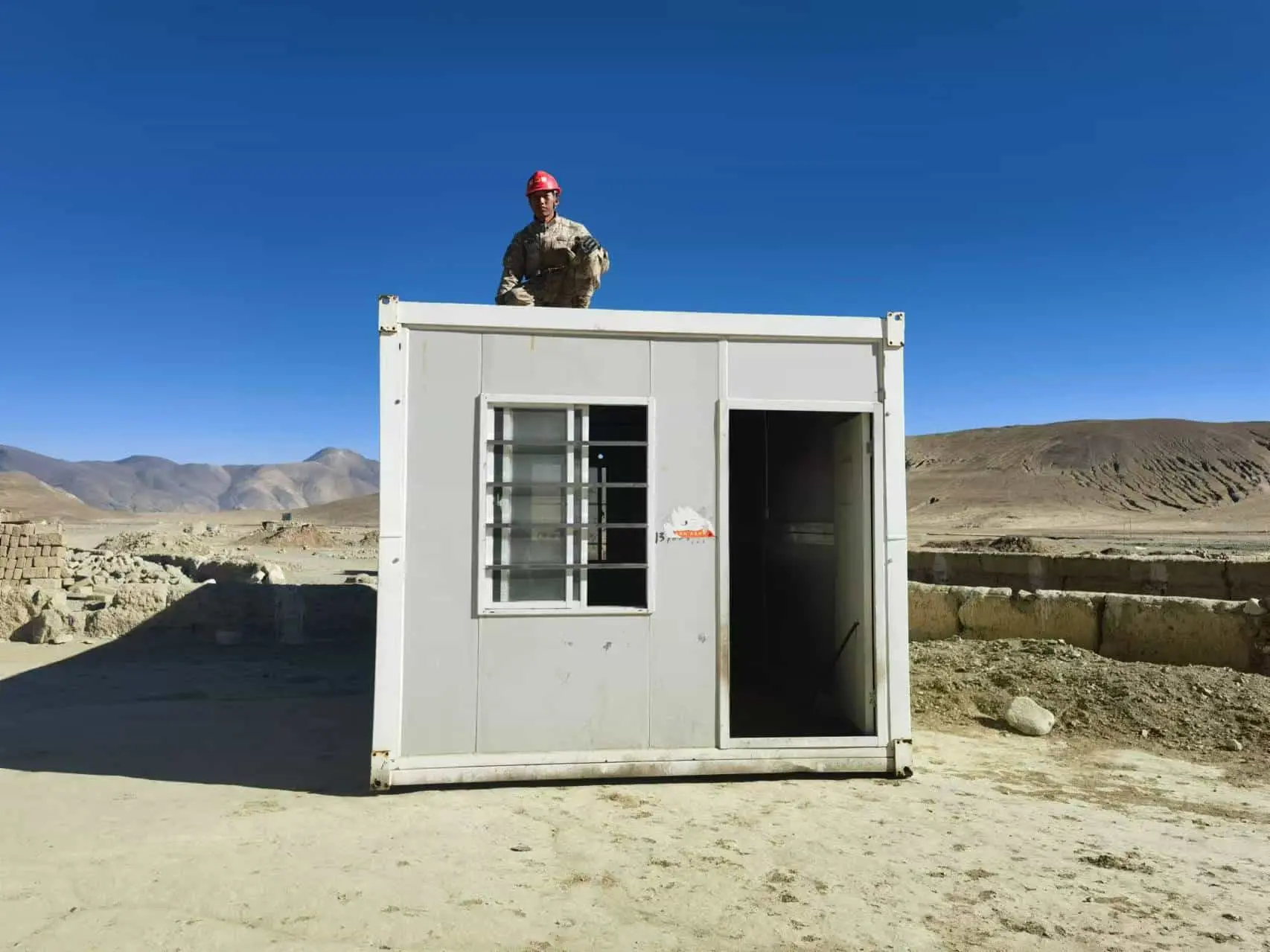
A folding container house is a factory-pre-assembled unit that utilizes a specialized hinge system. The roof, floor, and side walls are folded together for transport. Once it arrives at the site, a crane lifts the roof, and the walls automatically align and lock into place.
Key Advantage: The 4-Minute Setup For construction site housing, time is literally money. A single folding unit can be fully deployed in under 10 minutes (often as fast as 4 minutes with a skilled crew). This makes it the preferred choice for massive labor camps where hundreds of rooms need to be ready in a week.
Logistical Efficiency
Because they fold down to a height of approximately 40cm to 50cm, a single flatbed truck can carry up to 10–12 units simultaneously. This drastically reduces the shipping cost per square meter, a vital factor for international projects or remote mining sites.
Deep Dive: The Flat-Pack Container House
The flat-pack container house represents the gold standard for long-term modular workforce accommodation. Unlike its folding counterpart, it arrives as a “kit of parts” contained within a single frame.
Structure and Customization
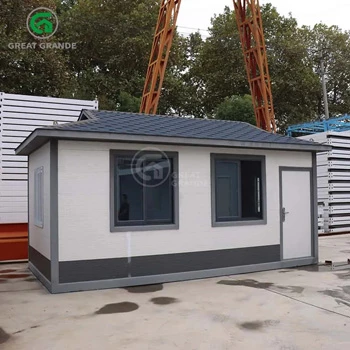
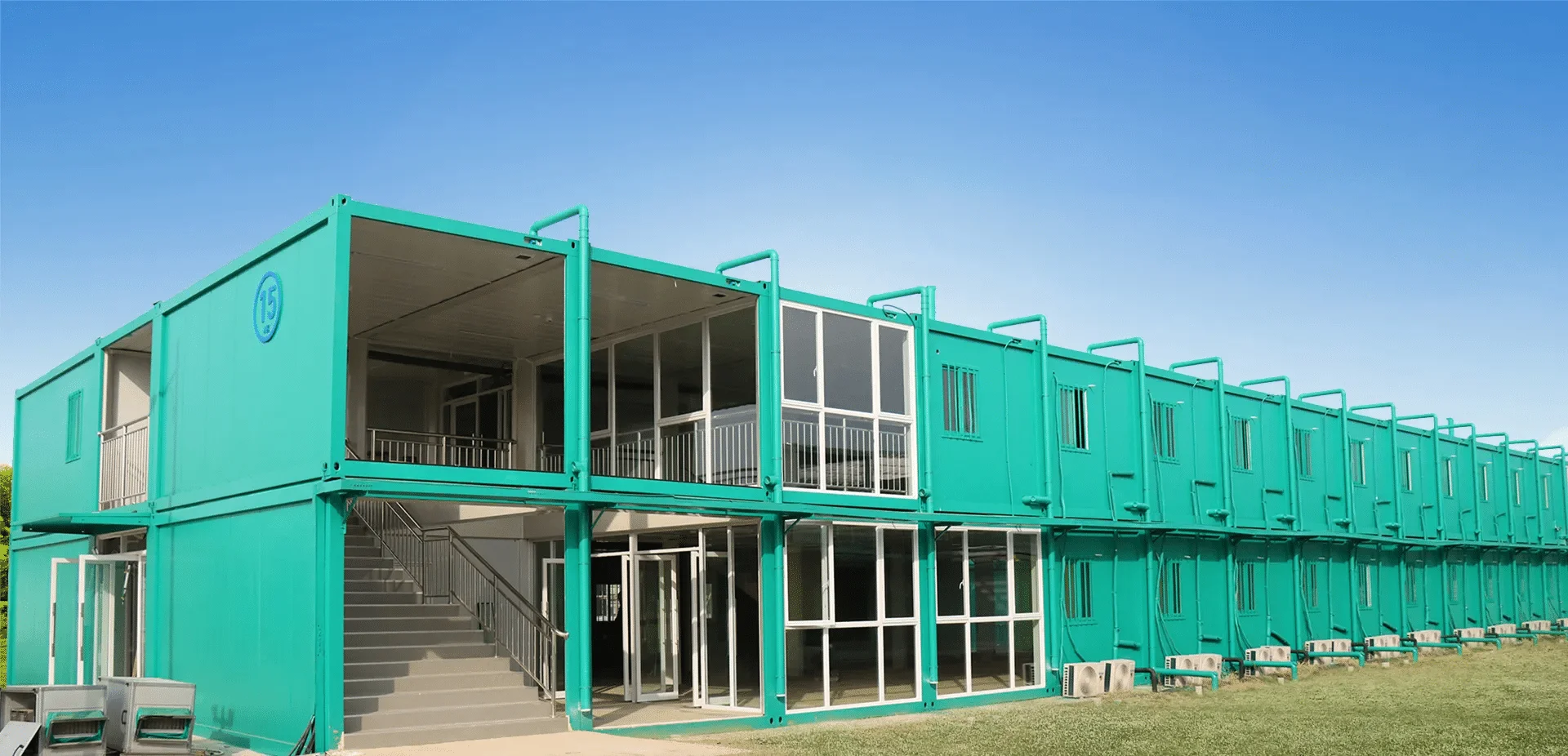
The flat-pack system consists of a top frame, a bottom frame, four corner posts, and interchangeable wall panels. While it requires more on-site assembly time than the folding version, it offers superior structural integrity and aesthetic flexibility.
Key Advantage: Better Insulation and Sealing Because the wall panels are inserted into a fixed frame rather than hinged, the sealing at the joints is often superior. This makes flat-pack houses more suitable for regions with extreme weather, providing better thermal insulation and soundproofing for tired workers.
Longevity and Reusability
Flat-pack houses are designed to be permanent or semi-permanent. They can be stacked up to three stories high, making them ideal for space-constrained urban construction sites where vertical density is required.
Folding Container House vs Flat-Pack
To understand which solution “wins,” we must compare them across several critical dimensions.
| Feature | Folding Container House | Flat-Pack Container House |
| Installation Speed | Extreme (4–10 mins/unit) | Moderate (2–4 hours/unit) |
| Transport Capacity | High (10-12 units/truck) | Moderate (4-6 units/truck) |
| Stackability | Limited (Usually 1–2 floors) | High (Up to 3 floors) |
| Aesthetics | Standardized/Industrial | High/Customizable |
| Sealing/Insulation | Good | Excellent |
| Best For | Emergency, Fast Camps, High Mobility | Semi-permanent Offices, Multi-story Housing |
The “Speed vs. Quality” Trade-off
The primary debate in the folding container house vs flatpack comparison is the trade-off between deployment speed and long-term comfort. If your project requires housing 500 workers by next Tuesday, the folding solution is the undisputed winner. However, if you are building a “village” for senior engineers who will stay on-site for three years, the flat-pack’s superior finishes and insulation provide a better ROI.
Cost Analysis and ROI for Construction Site Housing
When calculating the total cost of ownership (TCO), project managers must look beyond the initial purchase price.
- Labor Costs: Folding houses require minimal labor. Two workers and a crane can finish a camp in a day. Flat-pack houses require a dedicated assembly team, which increases the labor budget.
- Maintenance: Flat-pack houses generally have lower maintenance costs over a 15-year lifecycle due to their robust frame design.
- Resale Value: Modular units have high liquid value. Folding houses are easier to sell to other contractors because of their “plug-and-play” nature.
Sustainable Workforce Accommodation: The Green Edge
Both solutions contribute to “Green Building” certifications. By utilizing prefabricated components from manufacturers like Grande House, companies can:
- Reduce site noise and dust pollution.
- Minimize waste (factory-controlled environments use materials more efficiently).
- Repurpose units for future projects, adhering to circular economy principles.
Verdict: Which One Wins for Your Site?
The Folding Container House Wins If:
- You are dealing with a short-term project (6–18 months).
- You need to move the housing to a new location frequently.
- You have limited labor resources on-site for assembly.
- You need emergency or rapid-response housing.
The Flat-Pack Container House Wins If:
- You are building a semi-permanent headquarters or long-term camp.
- You need a professional, “office-like” aesthetic with glass curtain walls.
- You need to save ground space by building vertically (2-3 stories).
- The site is in a region with extreme cold or heat.
Conclusion
In the battle of folding container house vs flatpack, there is no single “best” answer—only the “best fit” for your operational needs. The folding solution offers unmatched speed and logistics, while the flat-pack provides a robust, multi-story foundation for high-end modular workforce accommodation.
For those looking to optimize their construction site container housing, exploring the diverse range of options at Grande House is the first step toward a more efficient, cost-effective, and worker-friendly job site.
FAQ
1. How long does a folding container house last in harsh environments?
A high-quality folding container house is built with galvanized steel frames and fireproof sandwich panels, typically offering a lifespan of 15 to 20 years. When used on construction sites, their durability is comparable to traditional temporary structures, provided they are properly anchored against high winds.
2. Can flat-pack container houses be relocated after assembly?
Yes. One of the main benefits of flat-pack modular units is their portability. While they take longer to disassemble than folding units, they can be taken apart, repacked into their flat-pack form, and transported to a new site, making them a sustainable long-term asset for construction firms.
3. Do these modular solutions require a permanent foundation?
Neither folding nor flat-pack houses require a deep concrete foundation. However, for stability and longevity, it is recommended to place them on a leveled surface, such as a simple concrete plinth, gravel bed, or steel piers. This prevents moisture buildup and ensures the locking mechanisms (for folding units) function correctly.