





Table of Contents
The rise of modular construction has brought forth a revolution in flexible living, with the folding container house standing at the forefront of this movement. However, as these innovative structures expand into colder climates—such as the Nordic regions, Canada, or high-altitude plains—a critical question arises: How do you maintain a comfortable living environment when the mercury drops to -20°C?
Living in a winterized container house is not just about turning up the heater; it is about engineering a system that balances thermal efficiency modular housing design with high-performance insulation. In this comprehensive guide, we explore the professional strategies to ensure your insulated folding container home remains a sanctuary of warmth even in the harshest Siberian-grade winters.
The Foundation of Warmth: High-Performance Insulation Materials
In a standard building, heat loss occurs primarily through the walls, roof, and floor. In a folding container structure, the challenge is magnified by the need for the hinges and joints to remain functional while being airtight.
Choosing the Right Core Material
To achieve true thermal efficiency modular housing, the choice of sandwich panel core is paramount. At -20°C, standard EPS (Expanded Polystyrene) often falls short. Experts recommend:
- Polyurethane (PU) Foam: Offering the highest R-value per inch, PU panels provide superior thermal resistance and are excellent for extreme cold.
- High-Density Rockwool: Not only does it provide significant thermal lag, but it also offers fire resistance, which is crucial when running high-output heating systems indoors.
Minimizing Thermal Bridging
A “thermal bridge” is a pathway for heat to escape through highly conductive materials, like the steel frame of the container. A professional winterized container house utilizes thermal break technology—inserting non-conductive materials between the interior and exterior metal skins—to ensure that the freezing outside temperature doesn’t “bleed” into your living space.
Windows and Doors: The Critical Seal
Even the best-insulated walls cannot compensate for leaky windows. In sub-zero environments, glass becomes a major source of radiant heat loss.
- Triple-Pane Glazing: For environments reaching -20°C, double-pane glass is the minimum requirement, but triple-pane windows with Argon gas fills are the gold standard for an insulated folding container home.
- Low-E Coatings: Low-emissivity (Low-E) coatings reflect infrared energy (heat) back into the room during winter, significantly reducing the energy required to stay warm.
- Reinforced Weatherstripping: The folding nature of these homes means there are more seams than a traditional cabin. High-grade EPDM rubber seals are essential at every joint to prevent “cold drafting,” which can drop internal temperatures by several degrees in minutes.
Floor Insulation: Blocking the Frost from Below
Many owners forget that the coldest air sits at the floor level. If your container house is elevated on a pier foundation (common for folding units), the underside is exposed to biting winds.
To optimize the thermal efficiency of modular housing, consider:
- Closed-Cell Spray Foam: Applying 2-3 inches of spray foam to the underside of the chassis creates a seamless, moisture-resistant barrier.
- Skirting: Installing an insulated skirt around the perimeter of the base prevents wind from whipping underneath the unit, creating a pocket of “dead air” that acts as an additional layer of insulation.
Smart Heating Solutions for Extreme Cold
Once the “shell” is optimized, you need a reliable heat source. In a winterized container house, the goal is consistent, dry heat.
Air Source Heat Pumps (Cold Climate Models)
Modern “Hyper-Heat” pumps are designed to operate efficiently even at -25°C. They provide the most energy-efficient way to maintain a steady 22°C inside.
Electric Radiant Floor Heating
Because folding containers have limited vertical wall space, radiant floor heating is an elegant solution. It warms the thermal mass of the floor, providing a “gentle” heat that doesn’t dry out the air as much as forced-air systems.
The Role of HRV/ERV Systems
In an airtight insulated folding container home, moisture from breathing and cooking can lead to condensation and mold. A Heat Recovery Ventilator (HRV) is vital. It brings in fresh cold air but uses the outgoing warm air to pre-heat it, maintaining 70-80% of the thermal energy while ensuring air quality.
Why Grande House Sets the Standard
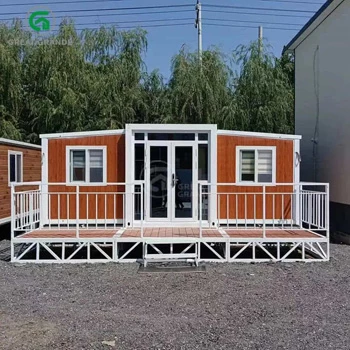
When searching for a folding container house that can truly withstand -20°C, engineering matters more than aesthetics. Grande House specializes in thermal efficiency modular housing that integrates these extreme-weather features into the manufacturing process.
Our winterized container houses are designed with:
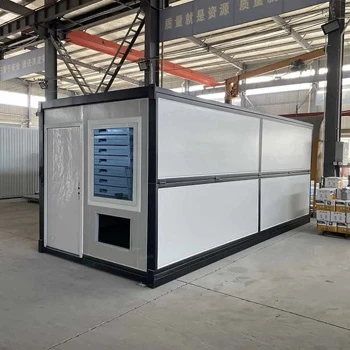
- Precision-engineered folding joints that eliminate air gaps.
- Customizable insulation thicknesses (up to 100mm+ PU panels).
- Integrated structural integrity that supports heavy snow loads, a common byproduct of extreme cold.

Conclusion
Living in a folding container home at -20°C is not only possible; it can be incredibly luxurious. By prioritizing high-R-value insulation, focusing on airtight seals at the folding seams, and utilizing smart heating technology, you transform a modular unit into a fortress against the frost. Whether for a remote worksite or a private mountain retreat, a properly winterized container house represents the pinnacle of modern, resilient living.
FAQ
Q1: Can a folding container house really handle heavy snow loads in extreme winters?
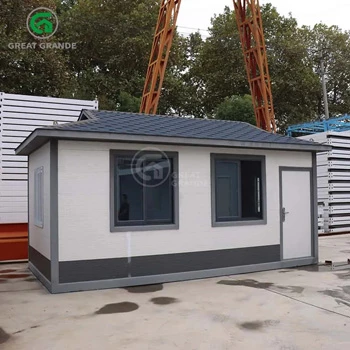
Yes. Professional-grade winterized container houses, like those from Grande House, are engineered with galvanized steel frames designed to exceed regional snow load requirements. The pitched roof design often found on premium modular units ensures that snow can slide off or be distributed evenly, preventing structural stress.
Q2: How do I prevent water pipes from freezing inside my folding container home?
In -20°C weather, plumbing should be kept within the “thermal envelope” (inside the insulated walls). For external inlets, we recommend using heat trace cables and foam lagging. Designing the layout so that the “wet wall” (kitchen/bath) is centrally located away from the coldest exterior corners is also a key strategy in thermal efficiency modular housing.
Q3: Will there be condensation on the interior steel walls?
Condensation occurs when warm, moist air hits a cold surface. In a high-quality insulated folding container home, the interior wall is separated from the exterior steel by thick insulation (a thermal break). By using an HRV system to manage humidity and ensuring there are no uninsulated “cold spots,” you can completely eliminate interior condensation even in the deepest winter.