





Table of Contents
The global modular housing market is undergoing a seismic shift. As traditional construction becomes increasingly expensive and time-consuming, developers and homeowners are turning toward prefabricated solutions. However, one of the most critical factors often overlooked in the initial planning phase is the complexity of transportation. Specifically, when comparing a Folding Container House to an expandable one, the financial implications of logistics can drastically alter the total project budget.
In this guide, we will dive deep into the nuances of shipping costs, volume efficiencies, and the overall economic landscape of modular container housing.


The Rise of Modular Logistics
The core appeal of modular housing lies in its “plug-and-play” nature. However, getting the “plug” to the site requires a sophisticated understanding of international freight. Shipping a house is not like shipping consumer electronics; it involves massive volume, significant weight, and specialized handling.
1. Folding Container Houses: The Volume Efficiency King
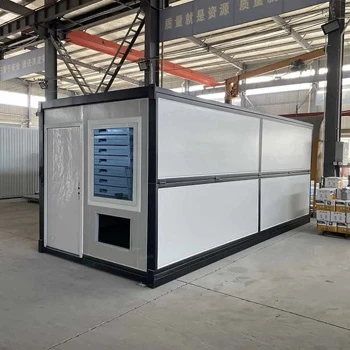
The Folding Container House has become a favorite for emergency housing, construction site offices, and budget-friendly residential projects. Its primary advantage is its ability to collapse into a fraction of its height.
When folded, these units typically measure only about 400mm to 600mm in thickness. This allows logistics companies to stack multiple units inside a single 40ft High Cube (HC) shipping container.
Shipping Efficiency Breakdown:
- Standard 20ft Container: Can carry approximately 1-2 units if they are pre-assembled but not foldable.
- 40ft HC Container: Can transport 10 to 12 folded units.
This 10x increase in capacity directly translates to a massive reduction in the per-unit shipping price. For developers looking to build a large-scale community, the folding design minimizes the carbon footprint and the freight bill simultaneously.
2. Expandable Container Houses: The Luxury of Space
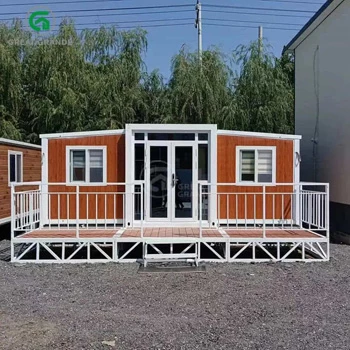
Expandable units offer a much larger living area upon deployment. While a standard container is roughly 2.4 meters wide, an expandable unit can branch out to 6 or 7 meters. This makes them feel like “real” homes rather than narrow boxes.
However, this complexity comes at a cost. Expandable container houses feature internal mechanisms, sliding tracks, and hinged wall panels that add weight and volume. Unlike the folding variety, they cannot be collapsed into a thin slab. They are usually shipped as a “Flat Pack” or as a single large unit that occupies most of a shipping container’s space.
Container House shipping logistics: A Deep Dive into Freight Variables
Navigating the waters of Container House shipping logistics requires more than just booking a spot on a vessel. You must consider the “Last Mile” delivery, crane requirements, and port handling fees.
Sea Freight vs. Inland Transport
Sea freight is often the cheapest part of the journey. The real expense occurs at the port. Because container houses are heavy, they require heavy-duty forklifts and cranes. If you are importing an expandable house that doesn’t fit standard dimensions, you might be forced to use “Open Top” containers or “Flat Racks,” which can double or triple the freight cost.
Port Charges and Demurrage
Because these houses are often used in remote locations, delays in clearing customs can lead to demurrage—expensive daily fees for keeping containers at the port. Professional logistics planning ensures that the arrival of the house coincides perfectly with the site readiness.
Comparing Costs: A Detailed Data Analysis
To help you visualize the difference, we have compiled a comparison table based on average 2024-2025 market rates for international shipping and material costs.
| Feature | Folding Container House | Expandable Container House |
| Units per 40ft HC | 10 – 12 Units | 1 – 2 Units |
| Average Shipping Cost per Unit (Intl.) | $400 – $800 | $2,500 – $5,000 |
| Setup Time on Site | 4-10 Minutes (2 People) | 2-4 Hours (3-4 People) |
| Internal Area (Standard 20ft base) | ~15 sqm | ~36 sqm |
| Logistics Complexity | Low (Standard handling) | High (Requires crane/leveling) |
| Insulation Capability | Moderate | High (Better wall thickness) |
Estimating the modular container house construction cost
When calculating the total modular container house construction cost, one must look beyond the purchase price of the steel frame. The “all-in” cost includes the foundation, utility connections, and interior finishing.
Foundation and Site Prep
Folding units are lightweight and can often sit on simple concrete piers. Expandable units, due to their wider footprint and moving parts, require a more precise and stable foundation to ensure the expansion mechanisms don’t jam over time.
Interior Customization
A significant portion of the construction cost goes into the “fit-out.”
- Plumbing and Electrical: Folding units often have simplified wiring. Expandable units require flexible connections that can survive the expansion process.
- Climate Control: Better insulation is often pre-installed in expandable units, which might save you money on HVAC in the long run, even if the initial shipping is pricier.
Labor Costs
The folding design is the winner here. Because it can be “popped up” in minutes, you save thousands in contractor fees. In contrast, an expandable house might require a small crew for a full day to ensure all seals are weather-tight and the structure is perfectly level.
Factors Influencing Your Decision
Scale of Project
If you are a government agency looking to house 500 people after a disaster, the folding model is the only logical choice due to the sheer efficiency of the logistics. If you are an individual looking for a modern “Granny Flat” or a backyard Airbnb, the expandable model’s higher shipping cost is a worthwhile investment for the added comfort.
The Strategic Outlook
As we look toward 2026, the industry is moving toward hybrid models. Some manufacturers are experimenting with “Ultra-Thin” expandable units that attempt to bridge the gap between folding efficiency and expandable luxury. For investors, staying updated on these technological leaps is vital.
The total modular container house construction cost is also being influenced by the fluctuating price of steel and sea freight. Keeping a close eye on the “Containerized Freight Index” can help you time your purchase to save upwards of 20% on shipping.
Conclusion
Choosing between these two structural types is ultimately a balance of “Cost vs. Comfort.” While the folding model offers unbeatable Container House shipping logistics efficiency, the expandable model provides a lifestyle that closely mimics traditional housing. By understanding these logistical hurdles early, you can ensure your modular project remains on budget and on schedule.
FAQ
1. Can I ship a container house to any country?
Yes, most container houses are designed to ISO standards, making them compatible with global shipping lanes. However, you must check local building codes regarding “Temporary Structures” or “ADUs” (Accessory Dwelling Units) to ensure the house is legal once it arrives.
2. Is the folding mechanism durable enough for long-term use?
Modern folding houses use galvanized steel hinges and high-strength locking mechanisms. While they are designed for rapid deployment, they can last over 20 years if properly maintained and placed on a level foundation to prevent structural stress.
3. How does the weight of these houses affect the total cost?
Shipping is often calculated by volume (CBM) or per container. However, inland transport (trucking) is strictly regulated by weight. Expandable units are significantly heavier than folding ones, which may require specialized heavy-haul permits depending on your local regulations.