




Table of Contents
Expandable container homes have gained massive popularity in recent years due to their flexibility, affordability, and fast deployment. From construction site housing to emergency shelters and even modern living spaces, these modular units are becoming a practical alternative to traditional buildings.
But are they really as good as advertised? In this honest review, we break down the real advantages and limitations of expandable container homes—and how advanced manufacturers like Grande – House are solving common industry challenges.
What Is an Expandable Container Home?
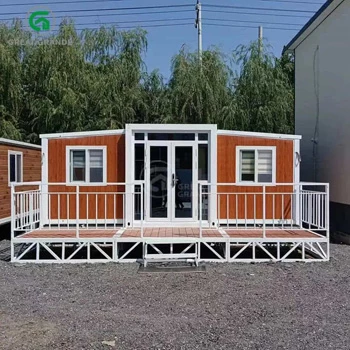
An expandable container home is a prefabricated structure that can be transported in a compact form and expanded on-site into a larger living or working space.
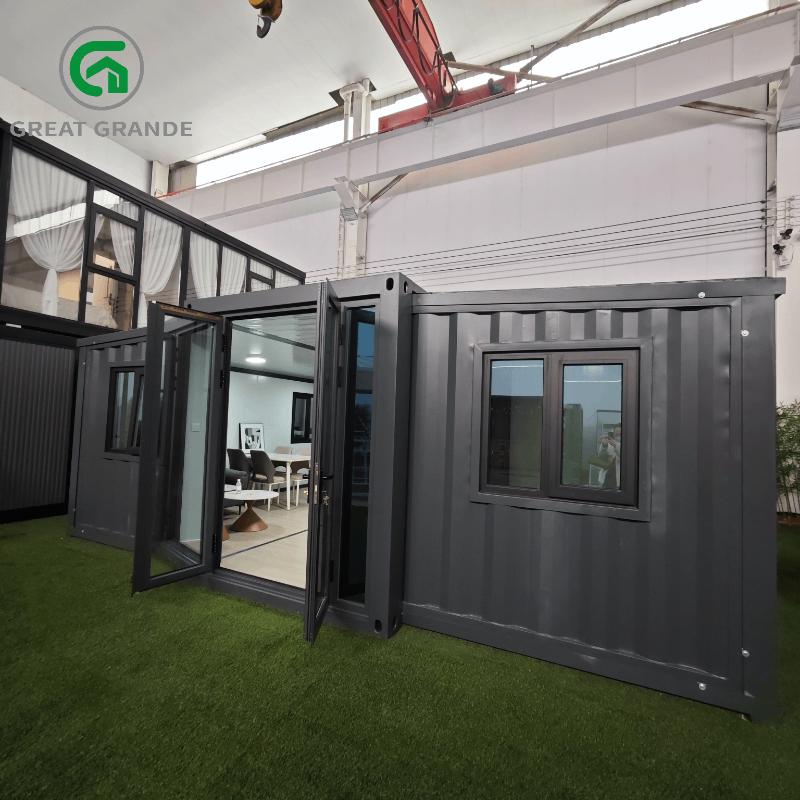
It is designed to combine mobility, efficiency, and functionality in one unit.
Advantages of Expandable Container Homes
1. Fast Installation in Just 10 Minutes
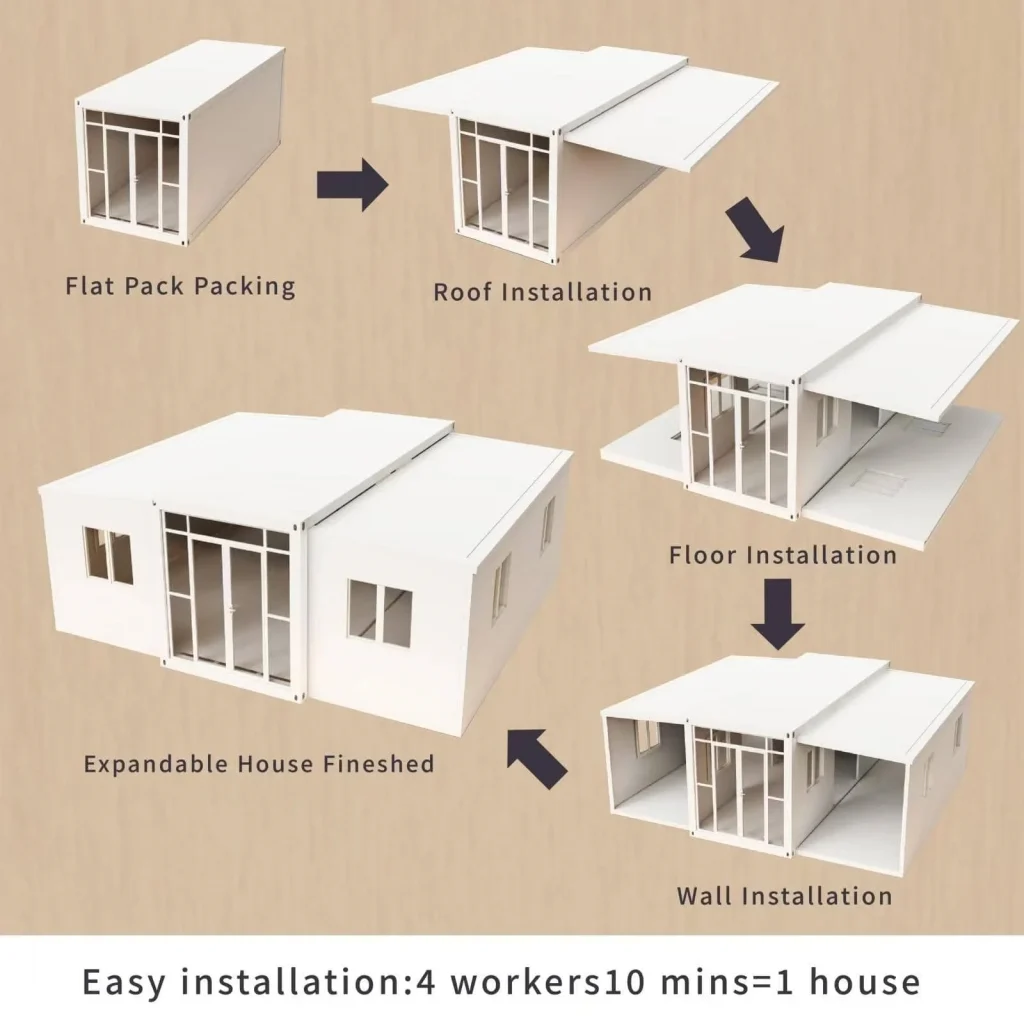
One of the biggest selling points is speed.
- The structure arrives pre-assembled
- Simply unfold and secure
- No complex construction required
In many cases, installation can be completed in as little as 10 minutes.
2. Easy for Shipping and Global Transport
Expandable container homes are designed with logistics in mind:
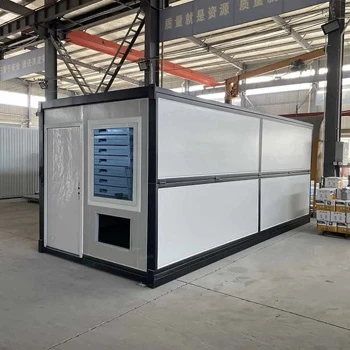
- Compact folding structure reduces shipping volume
- Fits standard shipping containers
- Lower transportation costs
This makes them ideal for export markets and remote projects.
3. Lower Overall Cost
Compared to traditional buildings:
- Lower labor costs
- Reduced construction time
- Minimal material waste
This makes expandable homes a budget-friendly housing solution for many industries.
Disadvantages You Should Know
No product is perfect—and expandable container homes are no exception.
1. High Requirements for Foundation Flatness
Because of the folding and expansion mechanism:
- The ground must be relatively flat
- Uneven surfaces can affect structural stability
- Improper setup may lead to misalignment
This means site preparation is critical before installation.
2. Insulation May Be Insufficient in Extreme Climates
Standard configurations may face challenges in:
- Extremely cold regions
- Very hot climates
Without upgrades, users may experience:
- Heat loss in winter
- Poor thermal comfort
How Grande House Solves These Problems
Instead of ignoring these industry limitations, Grande House has improved its products through material and structural upgrades.
✔ Solution 1: Enhanced Structural Stability
- Reinforced steel frame design
- Improved hinge and locking systems
- Better tolerance for minor ground unevenness
This reduces the risk of installation issues and improves durability.
✔ Solution 2: Upgraded Insulation Materials
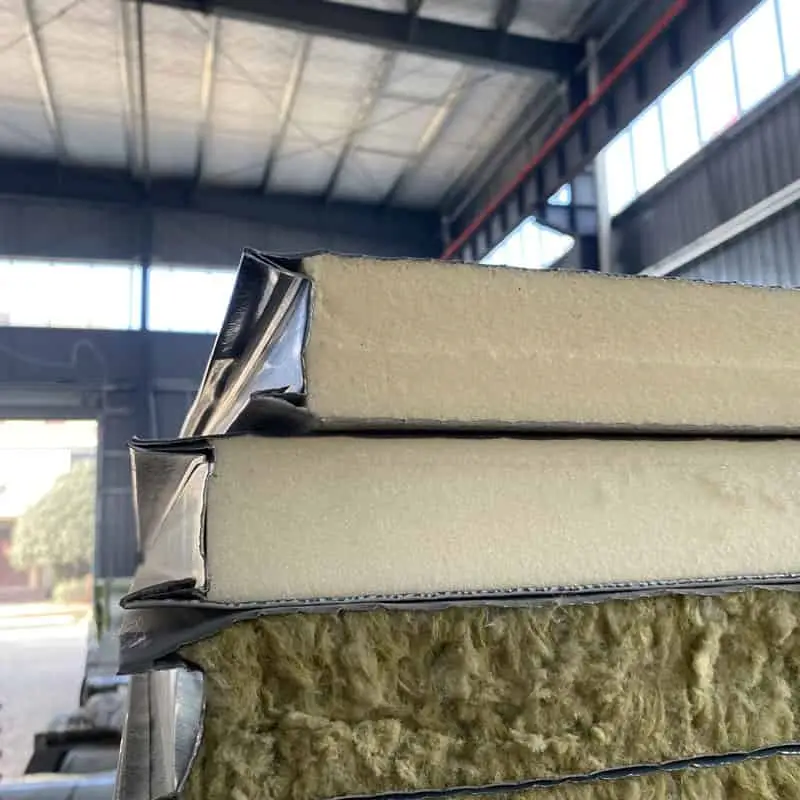
Grande House uses thickened PU (polyurethane) sandwich panels, which provide:
- Superior thermal insulation
- Better energy efficiency
- Improved comfort in extreme climates
Compared to standard panels, this significantly enhances year-round usability.
✔ Solution 3: Customization Options
- Climate-specific configurations
- Optional insulation upgrades
- Flexible layout design
This allows customers to tailor solutions based on their environment.
Are Expandable Container Homes Worth It?
The answer depends on your needs:
Ideal for:
- Temporary housing
- Construction site accommodation
- Remote project offices
- Emergency shelters
Consider carefully if:
- You operate in extreme climates without insulation upgrades
- Your site has uneven terrain
Conclusion
Expandable container homes represent a highly reliable and efficient evolution in modern spatial engineering. When properly designed, they provide an unmatchable blend of rapid field installation, cost-effective shipping logistics, and predictable capital expenditure control. However, generic market alternatives often fall short when deployed in demanding, long-term operational environments due to structural shifting and poor thermal performance.
For international developers, institutional investors, and B2B buyers focused on long-term structural durability, partnering with an elite engineering-led manufacturer like Grande – House is an absolute necessity. By upgrading to heavy-duty, hot-dip galvanized structural chassis frames and implementing advanced, high-density closed-cell Polyurethane thermal barriers, they have effectively resolved the traditional weaknesses of folding structures. These rigorous engineering standards make their expandable modules premium, highly durable assets capable of delivering superior, long-term operational returns across any global environment.