





Table of Contents
The global construction and real estate sectors are undergoing a massive paradigm shift. As urban density increases and the demand for rapid, eco-friendly, and cost-effective modular housing climbs, traditional building methods are being replaced by high-efficiency modular solutions. At the forefront of this revolution is the expandable container house.
For global importers, resort developers, municipal housing planners, and construction wholesalers, these innovative structures represent the future of temporary and permanent housing. When evaluating your procurement strategy, sourcing modular container homes from China offers a strategic pathway to secure high-quality, pre-engineered structures that align with strict international building codes.
This comprehensive 2026 guide breaks down the physical engineering principles behind expandable container houses, analyzes their core structural materials, and provides a strategic roadmap for B2B procurement and wholesale importing.
The Physics of Expansion: How 1 Box Becomes 3x the Space
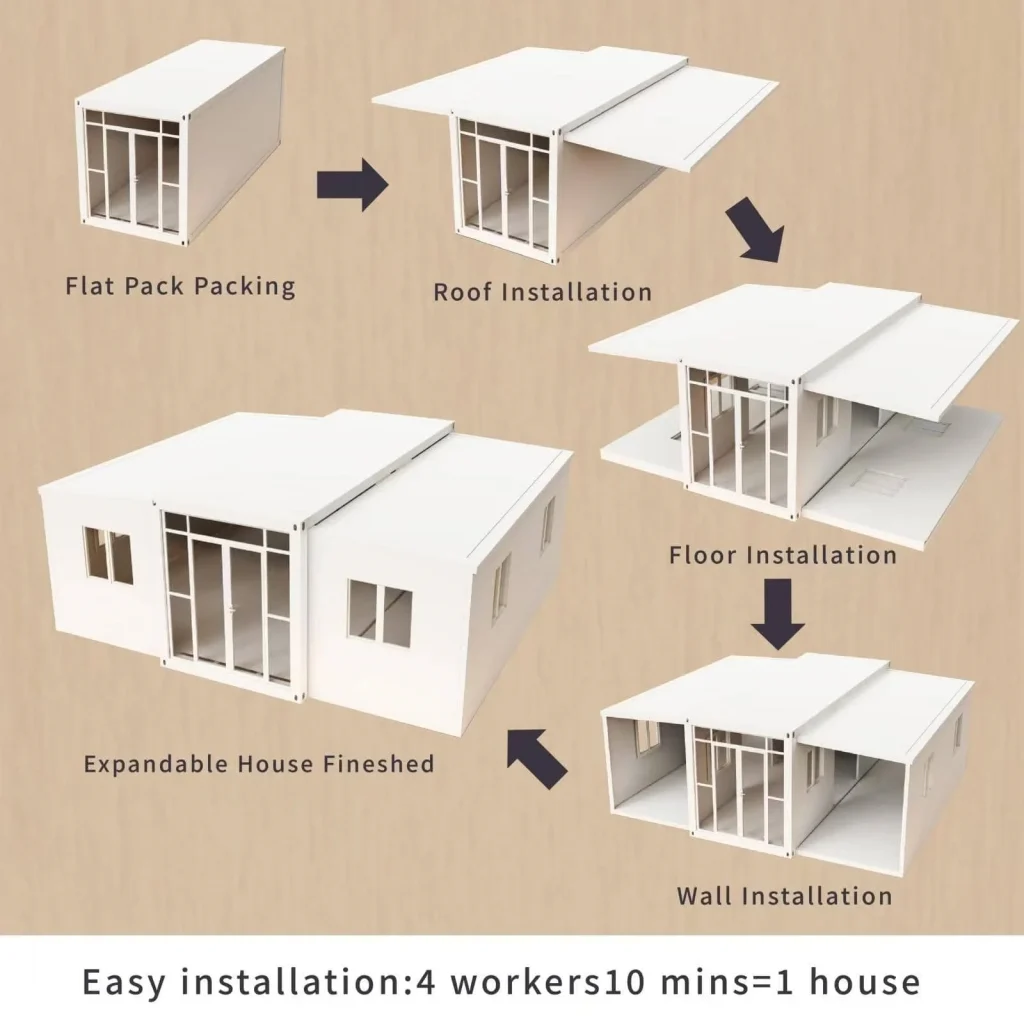
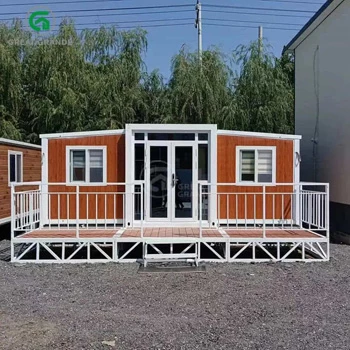
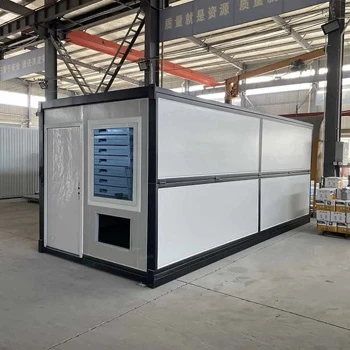
To the uninitiated, the transformation of an expandable container house looks like high-tech origami. The entire structure is shipped as a compact, standardized container box with a width of approximately 2.2 m. Once positioned on-site, it expands mechanically into a spacious three-in-one dwelling with a fully deployed width of 6.3 m.
This incredible 1:3 space-expansion ratio is governed by a precise system of nested steel framing and heavy-duty, multi-link hinges. Here is a step-by-step breakdown of the mechanical folding sequence:
- The Central Spine (The Core Module): The middle section of the container remains completely stationary. It houses the heavy structural utilities, typically containing the pre-installed bathroom, plumbing manifolds, electrical distribution boards, and kitchen fixtures. This section serves as the anchor for the entire structure.
- The Dual-Wing Fold-Out Frame: The outer walls of the folded box are actually hinged panels. During setup, the primary roof panel and the floor panel of the “wings” are unlocked. Using an integrated winch system or hydraulic cranes, the roof panel is lifted upward to a 90-degree angle, while the floor panel is lowered downward to form the foundation of the lateral wings.
- Hinged Side Wall Deployment: The interior wall panels, which are nested flat against the central spine during transit, are folded outward. These walls swing smoothly on industrial-grade carbon steel hinges to bridge the gap between the newly raised roof and the lowered floor.
- Sealing and Locking: Once the walls are pushed into their vertical alignment, they are locked into position using specialized interior mechanical tension bolts. This locks the structural geometry, compressing the EPDM (Ethylene Propylene Diene Monomer) rubber gaskets along the seams to create a 100% airtight and watertight envelope.
This mechanical configuration allows a small installation crew of 3 to 4 workers to fully erect a 37 ㎡ home from a folded state in just 15 to 30 minutes, with zero wet construction required on-site.
Core Materials: The Anatomy of Durability
The structural integrity, thermal efficiency, and lifecycle of a folding home are entirely dependent on its material composition. A breakdown of the essential expandable container house materials reveals how these structures achieve both extreme mobility and permanent-housing durability.
1. The Galvanized Steel Structural Frame
The primary skeleton of the container house must withstand immense static and dynamic loads during transport, folding, and heavy winds.
- Material Specification: High-strength structural steel (typically Q235B or Q345B carbon structural steel) is utilized for the main columns, corner castings, and folding beams.
- Anti-Corrosion Treatment: To prevent rust in humid coastal or high-precipitation environments, the entire steel frame undergoes hot-dip galvanization. The protective zinc coating must have a thickness of ≥ 60μm to ensure a corrosion-free lifespan of more than 20 to 30 years.
- Frame Thickness: Main structural load-bearing pillars feature steel thicknesses ranging from 2.5 mm to 3.0 mm, providing structural rigidity that easily complies with international seismic resistance requirements (typically rated up to Class 8).
2. High-Performance Insulated Sandwich Panels
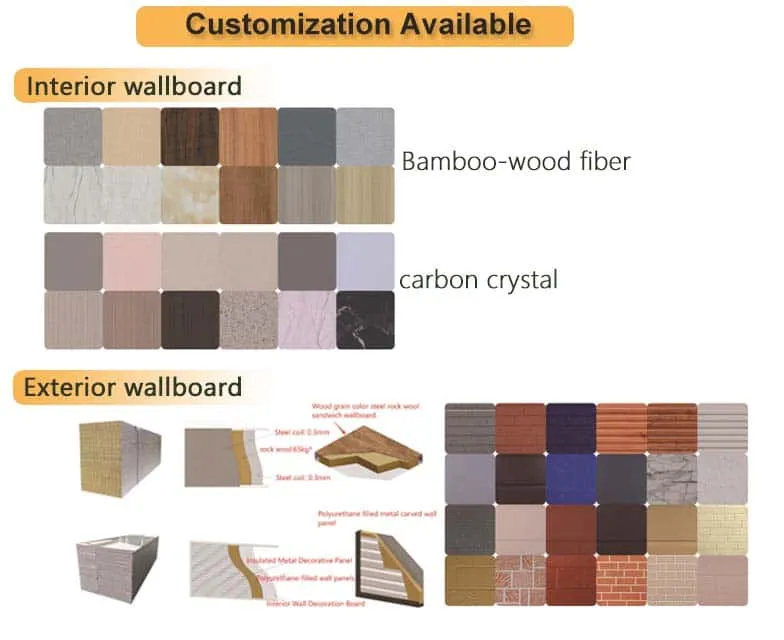
The exterior walls and roof of the folding wings utilize insulated sandwich panels to maintain indoor thermal comfort and minimize energy consumption. B2B buyers can choose between three primary insulation cores depending on regional climate demands:
- Polyurethane (PU) Sandwich Panels: Offering the lowest thermal conductivity (approx 0.020 W/m * K, PU panels provide ultimate thermal insulation. They are highly recommended for extremely cold climates.
- Rockwool Sandwich Panels: Composed of high-density basalt fibers (≥ 120 kg/m³), Rockwool offers outstanding Class-A fireproofing capabilities. It is highly resistant to heat conduction and does not emit toxic smoke during combustion.
- Glasswool/EPS Panels: A highly cost-effective option for temperate climates, providing lightweight insulation with reliable water resistance.
The exterior skin of these panels consists of double-sided 0.4 mm ~ 0.6 mm pre-painted galvanized steel sheets (PPGI), coated with fluorocarbon (PVDF) paint to resist intense UV radiation and prevent fading.
Technical Specifications and Materials Matrix
To help procurement directors compare standard versus premium material configurations, the matrix below outlines the baseline physical and structural properties of modern expandable homes:
| Structural Element | Standard Configuration | Premium / Severe-Duty Configuration | Key Performance Indicator |
|---|---|---|---|
| Main Steel Frame | Q235B Steel (2.5mm thickness) | Q345B Low-Alloy Steel (3.0mm thickness) | High tensile strength; resists wind load up to Class 10 |
| Galvanized Layer | Electro-galvanized (15μm ~ 20μm) | Hot-dip galvanized (≥ 60 μm | Zero oxidation/rust for up to 30 years |
| Wall Insulation | 50 mm EPS (Expanded Polystyrene) | 75 mm~100 mm PU or High-Density Rockwool | Fire rating Class A; Thermal U-value ≤0.35 W/㎡ * K |
| Floor System | 15mm MGO (Magnesium Oxide) Board | 18 mm Fiber Cement Board + SPC Vinyl finish | Waterproof, anti-rot, insect-resistant; floor load capacity ≥ 2.5kN/㎡ |
| Glass Windows | Single-pane tempered glass (5mm) | Double-glazed Low-E tempered glass (5mm} + 12A + 5mm) | Acoustic reduction ≥ 35dB; UV protection ≥ 95% |
| Roof Load Capacity | 0.8kN/㎡ (Light snow load) | ≥ 1.5kN/㎡ (Heavy-duty alpine snow load) | Prevents collapse under concentrated winter snow |
Why Expandable Containers Are Dominating the Industry
The rapid rise of this technology comes down to a perfect storm of efficiency, portability, and cost-control:
- Unmatched Logistics Savings: Because they fold down into a standard container footprint, they can be shipped worldwide via ocean freight and standard flatbed trucks without requiring expensive “oversized load” permits.
- Incredible Speed: A traditional home build takes months and relies on unpredictable local labor. An expandable container house can be fully erected, sealed, and ready for interior decorating in less than a single day.
- Eco-Friendly Footprint: Factory construction minimizes building material waste to near zero, and the structures can be set up on simple pier foundations, leaving the natural surrounding landscape completely undisturbed.
Conclusion
The expandable container house is no longer a futuristic concept—it is a highly practical, field-tested reality. By combining the rust-resistant strength of a galvanized steel skeleton with the energy-saving insulation of modern sandwich panels, these homes offer a durable, affordable, and incredibly flexible housing alternative.
Are you planning an off-grid project, an affordable housing development, or looking to add an ADU to your property? Grande team manufactures premier, certified expandable container houses engineered for maximum durability and rapid deployment. Contact us today for our updated product catalog, customized floor plans, and factory-direct global shipping quotes.