





With the continued growth of the global tourism industry, hotels, resorts, and boutique accommodations are seeking more flexible and efficient accommodation construction solutions. Compared to the long construction cycles and high investment costs of traditional hotels, modular container houses are gradually becoming a new choice in the hospitality industry due to their advantages of rapid construction, flexible expansion, and high customization.
Modern container house hotels are no longer simple temporary buildings, but rather integrated systems such as insulation, soundproofing, HVAC, and water supply and drainage, providing guests with a comfortable, safe, and distinctive accommodation experience. For hotel investors, resort developers, and boutique accommodation operators, expandable container houses not only shorten construction cycles but also support gradual expansion according to market demand, reducing upfront investment risks while reserving more space for future project development.
Why Are Modular Container Houses Suitable for Hotels and Resorts?
Modern hospitality projects focus not only on construction speed but also on long-term operational performance. An excellent modular container house solution needs to meet the requirements of comfort, durability, and commercial operation.
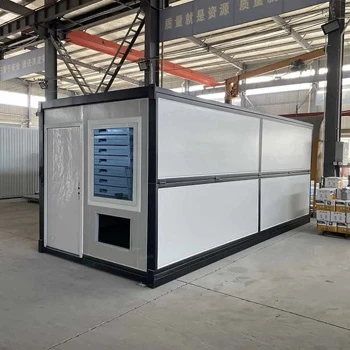
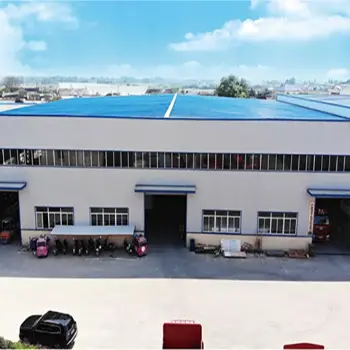
First, modular construction can significantly shorten project development timelines. Most structural components and interior finishing work can be completed in the factory, while on-site installation only requires foundation preparation, module assembly, and system connections. This greatly reduces construction time. At the same time, standardized manufacturing ensures consistent quality and minimizes uncertainties during on-site construction.
Second, modular container houses offer excellent scalability. For tourism projects, accommodation demand often changes according to seasons, marketing strategies, and brand development. Instead of building a large number of permanent rooms at once, operators can start with basic accommodation units and add more modules after the business becomes stable. This “expand according to demand” approach helps reduce initial investment pressure.
More importantly, modern container houses are equipped with complete living systems. High-performance insulation materials, such as rock wool and PU insulation panels, improve energy efficiency. Professional soundproofing structures reduce external noise and enhance guest privacy. Combined with air conditioning, fresh air ventilation, water supply, drainage systems, and smart controls, modular accommodation units can provide the comfort required for long-term hospitality operations.
7 Expandable Modular Container House Solutions for Hospitality Projects
1. Compact Premium Guest‑room Module | One‑room Layout With Double‑bed Units
This open‑plan single‑unit cabin holds one queen‑size bed plus two single beds. It comes with an independent wet‑dry separated bathroom, compact kitchen countertop and floor‑to‑ceiling viewing windows. As a single‑container standard guest room, its indoor usable area reaches around 26 m².
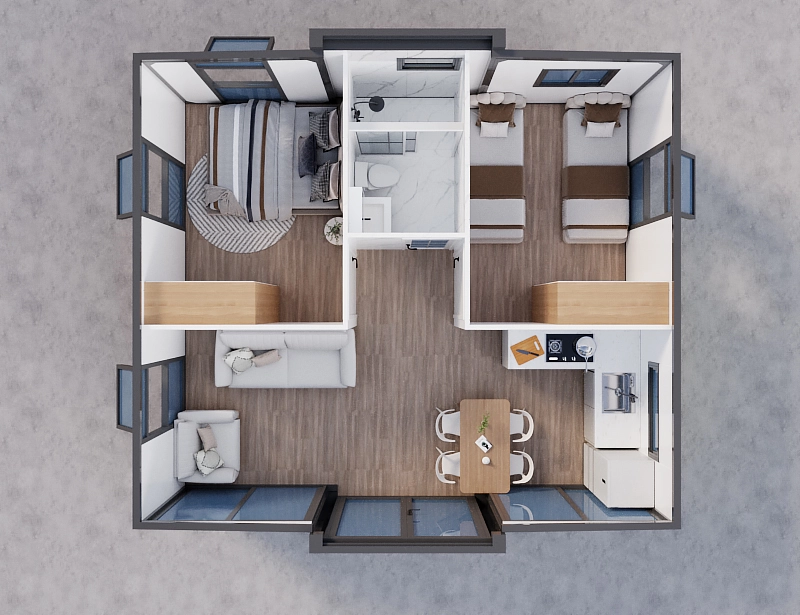
It perfectly fits the positioning of a compact premium guest‑room module and serves as the basic standard room.
Capable of accommodating 3‑4 guests, it works as a foundational room type for boutique homestays, budget scenic‑spot lodging and base‑camp accommodation.
All water‑electric pipelines and bathroom fixtures are pre‑fabricated in‑factory. The unit can start operation right after hoisting and on‑site utility connection. Its lightweight structure allows you to add extra units swiftly during peak tourist seasons.
Ideal for mountain homestays, roadside inns and basic lodging units at glamping resorts.
2. High‑end Vacation Suite Module | Dual‑bedroom Unit With View Terrace
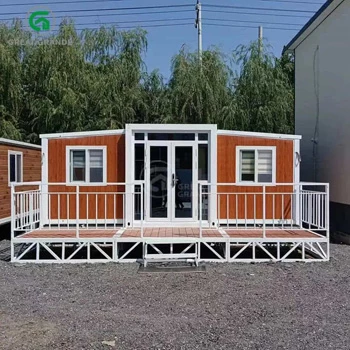
Assembled from two connected container units, this 38 m² suite features two separate bedrooms, an open‑plan living‑dining zone, an integrated kitchen, a private restroom, an external wooden viewing terrace and full‑size panoramic glass windows.
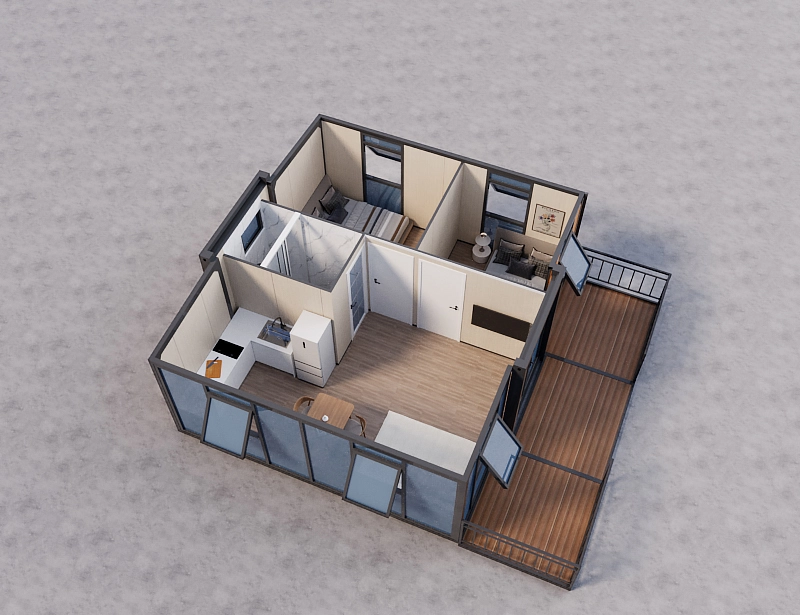
This unit matches the high‑end vacation suite module (35‑50 m² luxury suite).
You may arrange one master bedroom for couples and the secondary chamber as a lounge room, making it well‑suited for romantic getaways and honeymoon stays.
The outdoor viewing terrace acts as a core selling point for premium pricing, perfectly suited for lakeside, seaside and mountain‑view resorts.
Its full‑set open kitchen enables self‑catering stays, supporting higher room rates and strong competitive differentiation.
3. Family‑oriented Modular Villa | Spacious Three‑bedroom Open‑plan Unit
Combined from multiple connected container modules, this 82 m² villa contains three private bedrooms, an extra‑wide open‑plan living hall, separate dining space, an enclosed kitchen and an independent restroom.
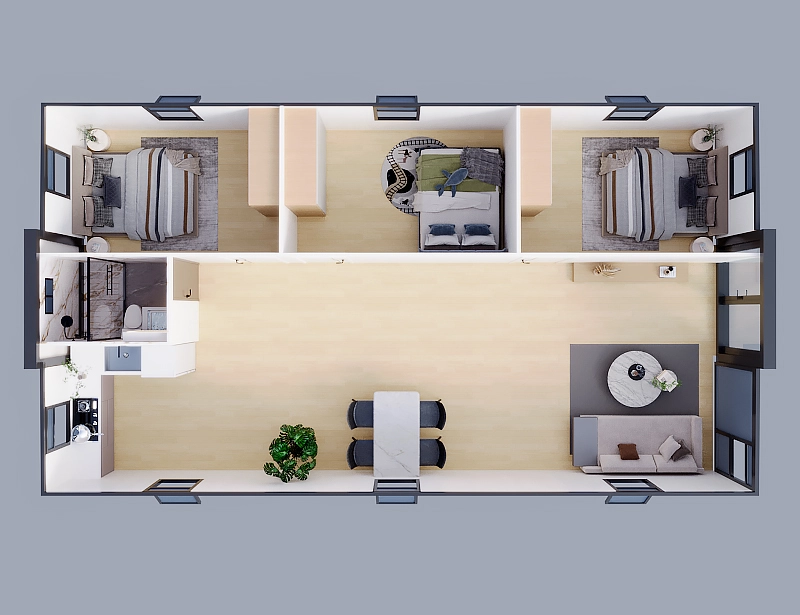
It meets the specifications of 60‑90 m² multi‑unit assembled family‑use villas.
The three‑bedroom layout sleeps 4‑6 visitors and caters to family trips, parent‑child holidays and group friend get‑togethers.
The roomy shared living and dining space supports family‑time recreation and meals.
During off‑season periods, internal partitions can be adjusted to split the villa into three standalone rentable rooms for improved asset utilisation.
4. Modular Container Hotel Complex | Deluxe Three‑bedroom Two‑bath Family Suite
Built from interconnected modular containers, this deluxe family layout includes three private bedrooms, two separate bathrooms, a large living room, formal dining space, an individual work nook and a closed‑off kitchen.
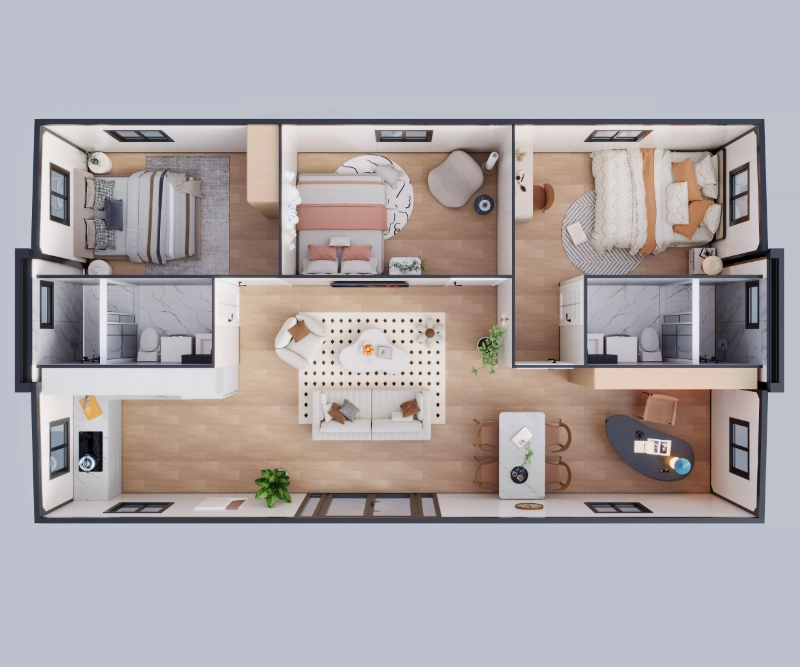
It serves as the flagship family‑friendly unit within large‑scale container hotel clusters.
Resort complexes can combine standard guest rooms, luxury suites, this large‑scale family villa and glamping cabins for diversified lodging options.
Scenic‑zone projects can adopt phased‑on construction: launch basic guest rooms for market testing first, then add large‑capacity family villas to capture family‑tourist groups as visitor numbers rise.
Dual‑bathroom design eliminates morning restroom queues for long‑term vacation‑stay guests.
5. Luxury Glamping Module: Combining Nature and Hotel Comfort
In recent years, glamping (luxury camping) has become a growing trend in the global tourism market.
Compared with traditional tent accommodation, modular glamping houses provide a more stable, secure, and comfortable guest experience.
This solution typically includes a bedroom, private bathroom, panoramic windows, and outdoor terrace, allowing guests to enjoy nature while experiencing hotel-level facilities.
It is especially suitable for forest resorts, eco-tourism projects, and themed hospitality developments.
6. Modular Reception Center and Operation Space
In addition to accommodation, modular buildings can also be used for hospitality operation facilities.
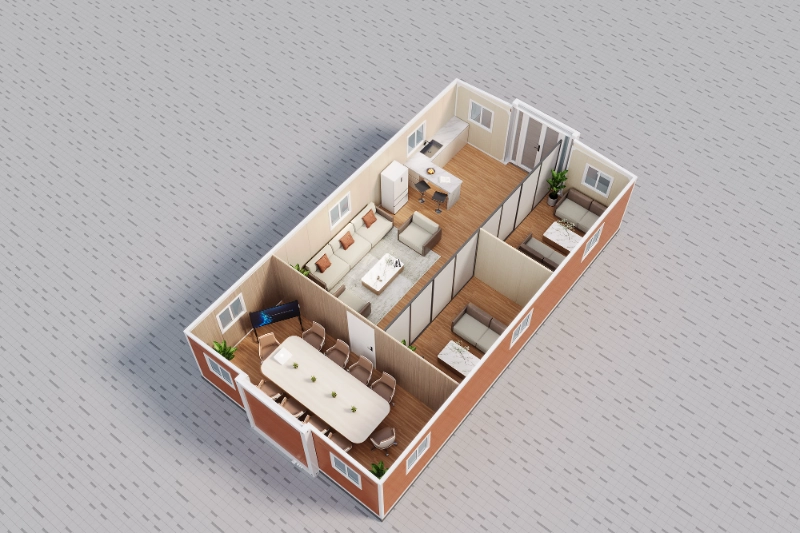
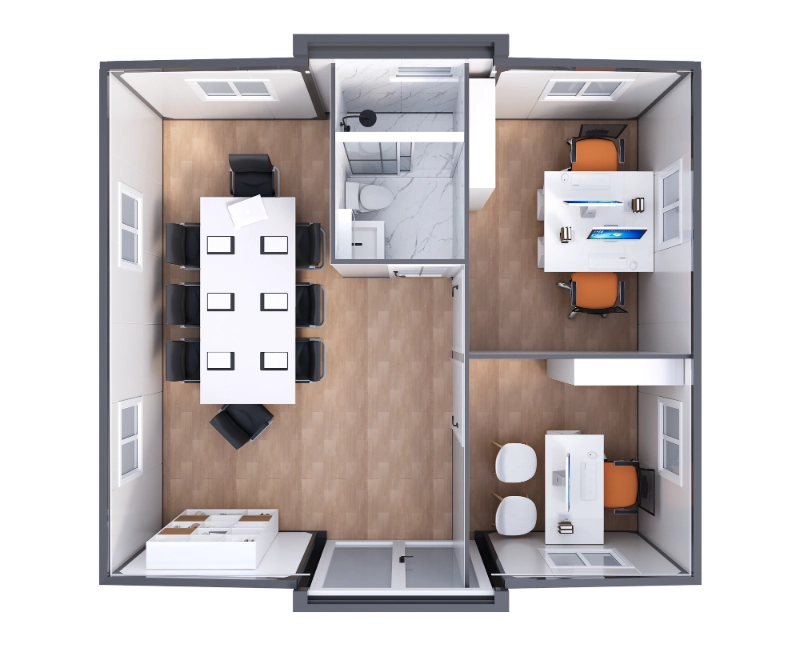
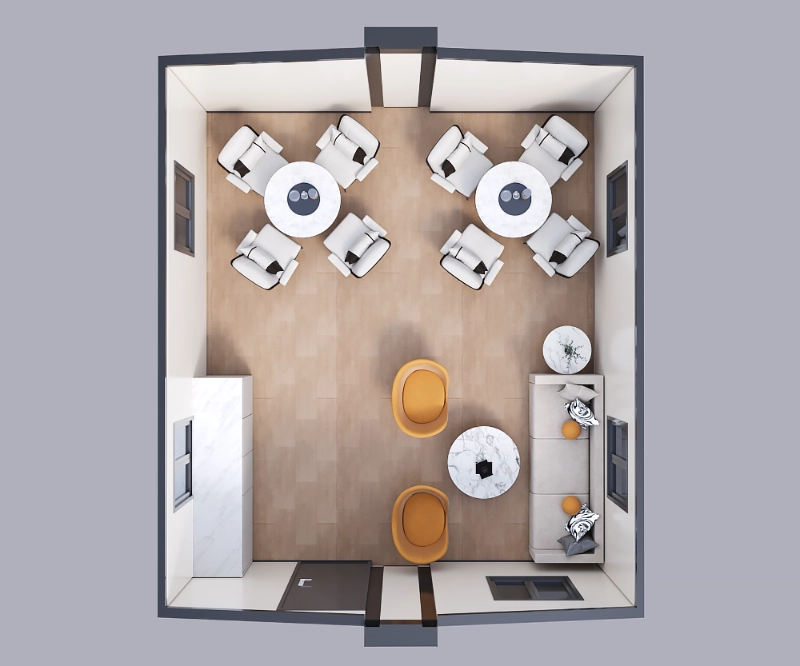
Applications include:
- Reception centers
- Office spaces
- Staff rest areas
- Storage facilities
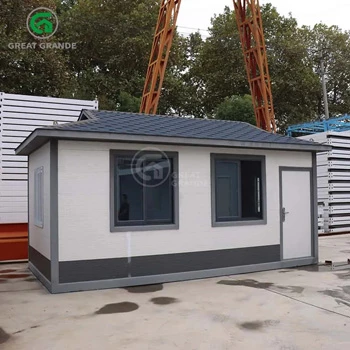
For newly developed resorts or temporary tourism projects, modular operation spaces can quickly complete essential infrastructure while avoiding the high costs and long construction periods associated with traditional buildings.
7. Multifunctional Expandable Module: Supporting Future Business Changes
The tourism market is highly dynamic, and operators need more flexible space solutions.
Multifunctional modular buildings can be adapted according to different requirements, including:
- Guest rooms
- Lounge areas
- Workspaces
- Dining areas
With expandable structural designs, hospitality operators can adjust space functions according to market changes and improve asset utilization.
Commercial Value and ROI Analysis of Modular Container Hotels
For hotel investors, construction costs are only one part of the decision-making process. Operational efficiency and return on investment are equally important.
Take a small container hotel project with 10 guest rooms as an example:
Assumptions:
- Each guest room: approximately 30㎡
- Average room rate: $120/night
- Annual average occupancy rate: 70%
Annual room revenue:
10 rooms × $120 × 365 days × 70%
≈ $306,600/year
In addition, the project can generate additional income through:
- Breakfast services
- Special events
- Outdoor experiences
- Local tourism activities
Due to their fast construction speed, flexible investment model, and low expansion costs, modular container hotels have strong commercial potential in tourism destinations.
Grande-House: Professional Modular Building Solutions for Hospitality
Grande-House is dedicated to providing high-quality modular container house solutions for hotels, resorts, and homestay projects.
We provide not only standardized products but also customized designs based on different project requirements, including building dimensions, space layouts, exterior styles, and interior configurations.
Through comprehensive building systems, Grande-House modular homes provide:
- Efficient insulation to improve energy performance;
- Professional soundproofing to enhance guest comfort;
- Integrated HVAC systems suitable for different climates;
- Complete plumbing and electrical designs for long-term operation;
- Flexible expansion capabilities to support future business growth.
From individual boutique guest rooms to large-scale modular resorts, Grande-House helps customers create efficient, modern, and commercially valuable hospitality spaces.
Conclusion
As the tourism industry continues to move toward personalization and experience-based travel, modular container houses are becoming an important trend in hotel and resort development.
With flexible design, rapid deployment, and sustainable expansion capabilities, container houses for hospitality not only reduce project development risks but also help investors create distinctive accommodation brands.
Whether for boutique homestays, eco resorts, or large tourism real estate projects, choosing high-quality expandable container houses provides a more flexible and reliable solution for future hospitality business growth.