


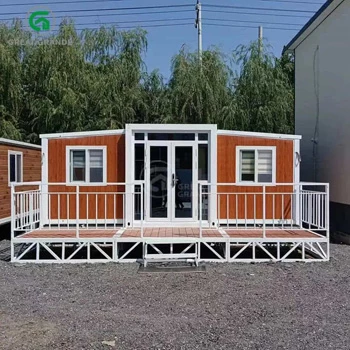
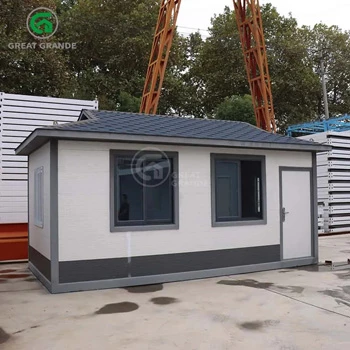
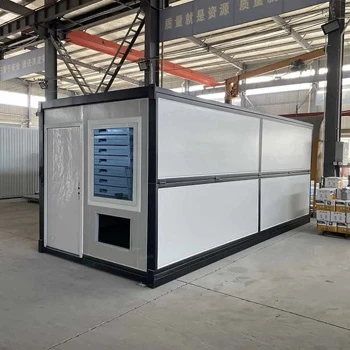


The standard folding container house has unfolded external dimensions of 5800×2500×2390 mm and a folded height of only 360 mm (compression ratio of approximately 6.6:1). It can be installed by two people in 10 minutes, and a single 17.5-meter flatbed truck can carry 20 sets.
The folding container house has revolutionized temporary modular construction by solving the industry’s biggest headache: logistics costs.
By transitioning from a flat-pack state to a fully functional living space in minutes, these units offer an unparalleled balance of portability and durability.
Technical Specifications: The Anatomy of a Folding Unit
To optimize site planning, one must distinguish between the footprint required for transport versus the actual living space available once deployed.
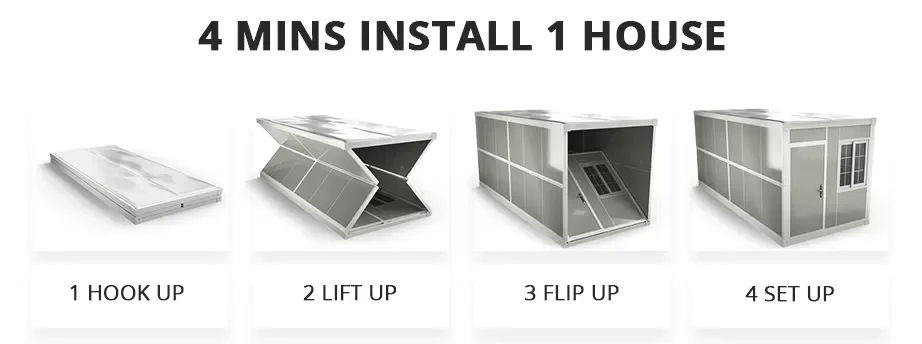
1. Dimension Breakdown
The magic of the folding container house lies in its 6.6:1 compression ratio. While the length and width remain constant to fit international shipping standards, the vertical profile shrinks dramatically when folded.
| Feature | External Dimensions | Internal Dimensions |
| Length | 5800 mm | 5635 mm |
| Width | 2500 mm | 2370 mm |
| Height (Expanded) | 2390 mm | 2265 mm |
| Height (Folded) | 360 mm | N/A |
| Total Weight | 1.1 Tons | — |
2. Material & Structural Integrity
Beyond dimensions, the “intelligence” of the space is defined by its materials. A high-quality folding container house is built to withstand harsh environments:
- Frame: High-strength galvanized steel, ensuring rust resistance and structural stability for multi-year use.
- Wall Panels: 50mm thickness featuring Rock Wool or EPS (Polystyrene) insulation. These materials provide excellent thermal regulation and fire resistance, essential for both sweltering construction sites and emergency disaster zones.


Logistics & Installation: Efficiency by the Numbers
The “2-10” Installation Rule
Efficiency isn’t just about size; it’s about time. These units are engineered for rapid deployment:
- Manpower: Only 2 people are required.
- Time: A complete setup takes approximately 10 minutes. This makes them the gold standard for disaster relief, where every minute saved can impact safety and recovery.
Logistics Superiority
The folded height of 360 mm allows for high-density transport, drastically lowering the carbon footprint and shipping cost per unit.
- 40-Foot High Cube (HC) Container: Can carry 12 sets.
- 17.5-Meter Flatbed Truck: Can transport 20 sets in a single trip.
Frequently Asked Questions (FAQ)
Q1: What is the main advantage of a folding container house over a flat-pack container?
While both are modular, the folding container house comes pre-assembled with walls attached to the frame. This reduces installation time from hours to just 10 minutes and minimizes the risk of losing small components during transit.
Q2: Are folding container houses suitable for extreme weather?
Yes. The 50mm Rock Wool insulation and galvanized steel frame are designed to handle significant wind loads and provide thermal protection in both cold and hot climates, making them ideal for rugged construction site dormitories.
Q3: How many units can be shipped in a standard 40 ft HC?
Due to the optimized folding height of 360 mm, you can fit 12 complete sets into a 40-foot high cube container, maximizing sea freight efficiency.
Conclusion
The folding container house is the pinnacle of space optimization in modular architecture. With an external expanded height of 2390 mm that collapses into a mere 360 mm, it offers a logistics-friendly solution without sacrificing internal comfort (2265 mm internal height). Whether it’s deploying 20 units on a single 17.5 m truck for disaster relief or setting up a construction site dormitory in under 10 minutes, the data proves that folding technology is the future of temporary housing.