





Table of Contents
When choosing a folding container house, price and appearance are only part of the decision. For long-term use, transportation, repeated installation, and demanding outdoor environments, the real quality of a folding container house comes from its structural frame, connection system, insulation materials, fire protection, waterproof design, and manufacturing precision.
At Grande, we believe a high-quality folding container house should be designed as a complete structural system rather than simply a prefabricated box that can be folded.
From galvanized steel frames and reinforced corner connections to fire-rated insulation panels and interlocking waterproof structures, every component plays a role in the overall performance of the building.
This guide explains the key technical specifications that buyers should evaluate and how Grande applies these principles to its folding container house manufacturing.
What Makes a High-Quality Folding Container House?
A high-quality folding container house should provide a balanced combination of:
- Structural strength
- Corrosion resistance
- Fire safety
- Thermal insulation
- Waterproof performance
- Wind and weather resistance
- Reliable folding mechanisms
- Transportation efficiency
- Manufacturing consistency
A folding structure is only useful when it can be transported efficiently while maintaining structural integrity after unfolding.
For this reason, Grande focuses on both material specifications and structural engineering when developing folding container houses.
1. Galvanized Steel Frame: The Foundation of Structural Quality
The steel frame is one of the most important components of a folding container house.
Grande uses galvanized steel square tubes as the main structural material for its folding container houses. Galvanization provides additional protection against rust and corrosion, making the frame suitable for repeated transportation and outdoor applications.
For the Grande 20FT Standard Folding Container House, the main frame uses 1.5 mm thick galvanized square tubes.
The structure is further reinforced with:
- 3 × 3 square tubes in the roof structure
- 14 square tubes in the bottom structure
- 15 mm thick cast-steel butt-joint corner fittings
- 304 stainless-steel hinges
These specifications are designed to create a stable structural framework while maintaining the folding and transportation advantages of the product.
Why Does Frame Thickness Matter?
Frame thickness should not be considered independently. Overall structural performance depends on the combination of:
- Steel thickness
- Steel grade
- Tube dimensions
- Reinforcement layout
- Welding quality
- Corner connections
- Hinge design
- Local structural requirements
Grande therefore focuses on the complete frame system rather than relying on a single material parameter.
2. Corrosion Protection for Long-Term Outdoor Use
Folding container houses are often installed at construction sites, worker accommodation projects, remote locations, temporary offices, camps, and other outdoor environments.
Exposure to rain, humidity, temperature changes, and transportation can accelerate corrosion if the frame is not adequately protected.
Grande combines a galvanized steel frame with an overall protective coating to improve corrosion resistance and surface durability.
The galvanized structure helps protect the steel substrate, while the exterior coating provides an additional layer of surface protection.
For projects in coastal, tropical, or high-humidity regions, Grande can also adapt material and surface-treatment configurations according to project requirements.
3. Wall Panel Materials and Fire Protection
The wall system directly affects the safety, thermal insulation, and indoor environment of a folding container house.
Grande offers folding container house configurations using rock wool and EPS sandwich panels, depending on the product and application requirements.
For fire-sensitive applications, Grande provides configurations with Class A fire protection.
The choice of wall panel should be based on the project rather than simply selecting the cheapest material.
Important factors include:
- Fire rating
- Panel thickness
- Insulation performance
- Material density
- Environmental conditions
- Interior comfort requirements
- Local building regulations
Rock Wool vs. EPS
Rock wool provides strong fire-resistance characteristics and is suitable for projects where fire safety is a major consideration.
EPS provides a lightweight insulation solution and can be used in suitable folding container house configurations.
Grande can select different panel configurations according to the customer’s application, climate, budget, and regulatory requirements.
For international projects, the final wall panel specification should always be confirmed according to the applicable local fire and building codes.
4. Waterproof Roof and Interlocking Joint Design
Waterproofing is one of the most important technical requirements for any folding container house.
A conventional building can use fixed wall and roof structures, while a folding container house needs additional attention at its folding joints.
Grande addresses this challenge through an interlocking concave-convex groove structure.
The galvanized steel components at the folding edges are designed to fit together tightly when the house is unfolded. This creates a more reliable sealing structure and helps reduce water infiltration through the folding joints.
Grande also uses waterproof and rust-resistant sealant in the roof system of applicable models.
Why Is the Interlocking Structure Important?
A folding house should not rely solely on adhesive or external sealant for waterproofing.
A well-designed mechanical connection can provide an additional physical barrier against:
- Rainwater
- Wind-driven rain
- Moisture penetration
- Water entering through folding joints
Grande’s interlocking structure is therefore an important part of its waterproofing approach.
5. Wind Resistance and Structural Stability
A folding container house may be installed in very different environments, from construction sites and temporary camps to coastal regions and areas exposed to strong winds.
Wind resistance therefore needs to be considered together with:
- Structural design
- Building height
- Foundation
- Anchoring method
- Installation conditions
- Local wind-speed requirements
Grande has developed folding container house configurations with enhanced wind and weather resistance. Certain Grande foldable container house configurations are specified with up to Level 12 wind resistance and Level 10 earthquake resistance.
These ratings apply to specific product configurations and should not be automatically generalized to every Grande model.
For a new project, Grande can evaluate the required structural configuration based on the project location and local requirements.
This is particularly important for:
- Coastal projects
- Typhoon-prone regions
- Temporary worker camps
- Emergency housing
- Remote construction projects
- High-wind environments
6. High-Quality Folding Hinges and Corner Connections
The folding mechanism is another key component that separates a well-engineered folding container house from a basic prefabricated structure.
The house must repeatedly move between its folded transportation configuration and its expanded installation configuration.
The hinges and corner connections therefore need to combine:
- Strength
- Corrosion resistance
- Accurate positioning
- Smooth folding
- Long-term durability
Grande uses 304 stainless-steel hinges in its folding container house structures.
The frame also uses 15 mm thick cast-steel butt-joint corner fittings in applicable standard configurations.
These components provide reinforced connection points while allowing the structure to fold and unfold efficiently.
7. Roof and Floor Performance
The roof and floor should also be included in the technical evaluation.
A professional folding container house manufacturer should be able to define the relevant requirements for:
- Roof load
- Floor load
- Snow load
- Drainage
- Moisture resistance
- Floor materials
- Roof insulation
Grande offers different structural and material configurations for different applications.
For example, some Grande container house configurations use Grade A fireproof glass magnesium floor boards, while other product configurations can be customized according to project requirements.
The correct roof and floor system depends on the building’s intended use and environmental conditions.
A construction-site office, worker accommodation project, emergency shelter, and permanent residential application may require different configurations.
8. Manufacturing Precision Matters as Much as Material Selection
High-quality materials alone do not guarantee a high-quality folding container house.
Manufacturing precision is equally important.
The folding structure contains multiple moving and connecting components. If the frame dimensions, hinges, panels, or connection points are not accurately manufactured, the house may become difficult to unfold or seal properly.
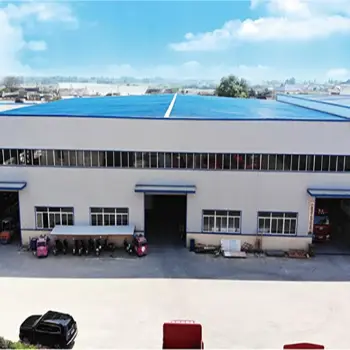
Grande uses precision manufacturing processes for its folding container house frames, including high-frequency welding equipment for structural components.
Quality control focuses on areas such as:
- Frame dimensions
- Welding consistency
- Corner alignment
- Hinge positioning
- Panel fitting
- Folding mechanism
- Surface treatment
- Finished-product inspection
This manufacturing consistency is especially important for B2B projects involving multiple units.
9. Transportation Efficiency Is Part of Product Quality
A folding container house is designed not only for installation but also for transportation.
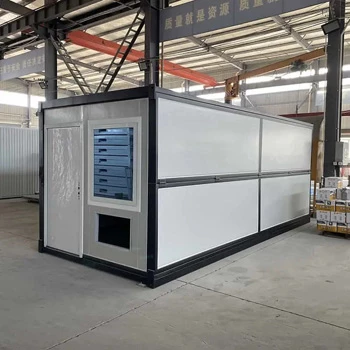
One of the major advantages of the folding structure is that multiple units can be transported in a more compact configuration than conventional modular buildings.
Grande’s 20FT Standard Folding Container House measures approximately:
5800 × 2500 × 2390 mm
when expanded, and a 40FT high-cube container can accommodate up to 12 sets under the published standard packing configuration.
This transportation efficiency can be particularly valuable for:
- International projects
- Remote construction sites
- Emergency housing
- Worker accommodation
- Large-scale temporary facilities
- Distributor orders
The final loading quantity can vary according to product configuration and packing requirements.
Grande Folding Container House: Our Technical Benchmark
A high-quality folding container house should not be defined by marketing language alone.
It should be supported by measurable specifications.
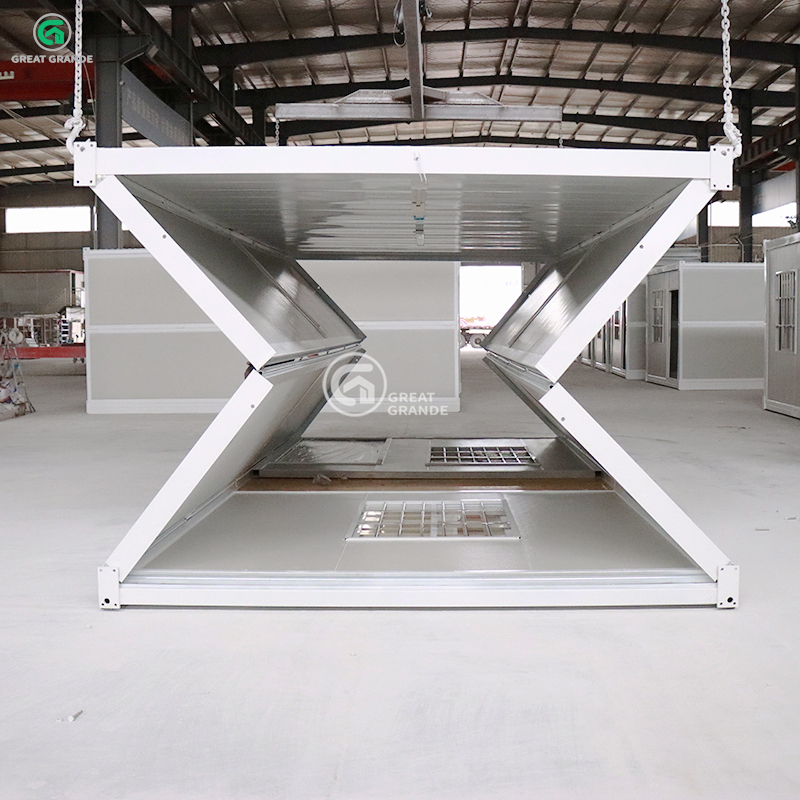
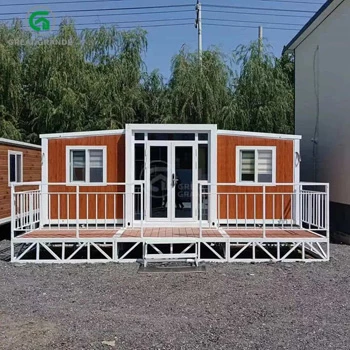
Grande’s 20FT Standard Folding Container House combines structural, material, waterproofing, and transportation specifications into one integrated system.
| Technical Specification | Grande 20FT Standard Folding Container House |
|---|---|
| Product Type | 20FT Standard Folding Container House |
| Expanded Size | 5800 × 2500 × 2390 mm |
| Main Frame | Galvanized steel square tube |
| Frame Thickness | 1.5 mm |
| Roof Structure | 3 × 3 square tubes |
| Bottom Structure | 14 square tubes |
| Corner Fitting | 15 mm cast-steel butt-joint fitting |
| Hinge | 304 stainless steel |
| Wall Panel | Rock wool / EPS configurations |
| Fire Protection | Class A configurations available |
| Waterproof Structure | Concave-convex interlocking groove |
| Frame Protection | Protective exterior coating |
| Loading Capacity | Up to 12 sets / 40HQ |
| Customization | Logo, color, appearance, layout and accessories |
This configuration represents how Grande translates its approach to structural strength, safety, durability, waterproofing, and logistics into a practical folding container house.
Frequently Asked Questions
What steel frame does Grande use for folding container houses?
Grande uses galvanized steel square tubes for its folding container house frames. The 20FT Standard Folding Container House uses a 1.5 mm thick galvanized square-tube frame, combined with reinforced roof and bottom structures.
What wall panels does Grande use?
Grande uses different insulated sandwich panel configurations, including rock wool and EPS, according to the product model and project requirements. Class A fire protection configurations are available for applicable products.
Are Grande folding container houses waterproof?
Yes. Grande incorporates a concave-convex interlocking groove structure into the folding edges to improve sealing and reduce water infiltration. Applicable models also use waterproof and rust-resistant roof sealants.
How does Grande protect its folding container houses against corrosion?
Grande uses galvanized steel for the main frame and applies protective surface coatings to applicable products. Specific corrosion-protection configurations can be adapted according to the project environment.
How many Grande folding container houses can fit into a 40HQ?
Grande’s 20FT Standard Folding Container House has a published packing configuration of up to 12 sets in a 40FT high-cube container. The exact loading quantity depends on the product model and packing configuration.
Can Grande customize folding container houses?
Yes. Grande provides customization options for areas such as logo, color, exterior appearance, layout, doors, windows, electrical systems, and interior configurations, depending on the product model and order requirements.
Conclusion
A high-quality folding container house should be evaluated through its engineering details, not just its appearance or price.
The frame needs to provide structural stability. The hinges and corner connections need to withstand repeated folding and installation. The wall panels need to provide appropriate insulation and fire protection. The roof and folding joints need reliable waterproofing. The entire structure needs to be manufactured with consistent precision.
Grande integrates these requirements into its folding container house manufacturing system, using galvanized steel frames, reinforced structural connections, 304 stainless-steel hinges, insulated wall panels, Class A fire-protection configurations, and interlocking waterproof structures.
For buyers looking for a durable and transport-efficient folding container house, these technical specifications provide a practical benchmark for evaluating product quality and selecting the right configuration for each project.