





Table of Contents
When “Unboxing Videos” Enter the Government Agenda
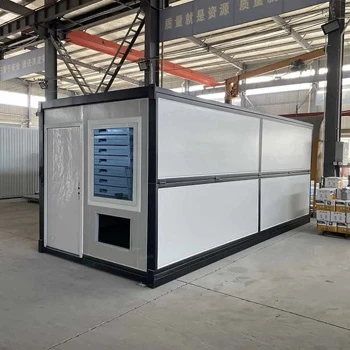
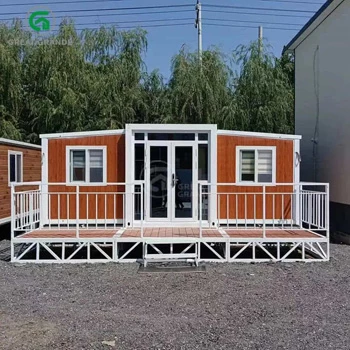
In recent years, expandable container homes have often been showcased on social media platforms in the form of “innovative DIY” projects or as convenient options for “backyard vacation homes.” However, in November 2025, a housing project announced by the Bermuda Islands has garnered widespread attention both within and outside the industry. Once considered a “niche” architectural form, expandable container homes have officially become one of the strategic solutions to address national housing crises.
Bermuda’s Minister of Housing, Zane DeSilva, announced that the government had purchased 11 modular and expandable container homes as part of an emergency housing pilot project. While the purchase is relatively small in scale, this initiative has far-reaching implications—it marks the critical transition of expandable container homes from consumer goods (B2C) to government infrastructure procurement (B2G).
Global Market Size and Trends from 2024 to 2025
Between 2024 and 2025, the global demand for modular housing experienced explosive growth, with expandable container homes becoming the fastest-growing subcategory.
- Global Market Growth
According to global construction industry market analysis, the global container home market exceeded $68 billion in 2024, with a projected compound annual growth rate (CAGR) of 6.5% for 2025. Notably, the submarket for modular expandable and foldable homes (Expandable & Foldable) is growing even faster at 9.2%, significantly outpacing traditional fixed container products. This suggests a strong market demand for products with a “high logistics-to-living-space ratio.”
- China’s Export Data Remains High
As the world’s largest container home manufacturing base, China’s import and export data also reflects the growing momentum of modular housing. According to customs data (HS code 9406, prefabricated buildings):
- In 2024, China’s total exports of prefabricated homes and container homes surpassed $3.2 billion.
- From January to October 2025, export value increased by approximately 18.5%, with orders from North America (the U.S. and Canada) and the Caribbean rising by 24%. This trend directly reflects the growing housing shortage and the need for post-disaster reconstruction in these regions.
- Changes in Procurement Prices and Market Structure
Data from 2025 shows an upward trend in the average value of single orders:
- From 2023 to 2024, mainstream orders were mainly 1-2 units from individual buyers (B2C), focused on low prices.
- In Q3-Q4 2025, bulk orders of 10 units or more (B2B/G2B) increased by 15 percentage points, signaling that institutional buyers such as the Bermuda government are gradually entering the market, driving a shift from “retail” to “wholesale/project” models.
Current Situation Analysis: It’s Not Just “Fast,” But Also the “Only Solution”
The Bermuda government’s choice of expandable container houses is driven not only by cost-saving motives but also by the urgency of solving the housing crisis. The characteristics of the housing crisis in North America and the Caribbean today are as follows:
- Speed Above All: Overcoming Traditional Construction Timelines
One of the key advantages of Bermuda’s pilot project is its commitment to delivering homes within four months. For island nations facing severe housing shortages, traditional building methods (e.g., steel-concrete structures) typically require 1-2 years to complete. This long construction cycle is burdensome for nations that urgently need to house residents. Expandable container homes, with their “factory pre-fabrication and on-site deployment” design, make them an ideal choice for addressing urgent humanitarian crises.
- Logistics Solutions for Island Economies
In the Caribbean region, the cost of transporting building materials is extremely high. Standard shipping containers (20ft/40ft) are designed for sea transport, and the expandable design allows for shipping in just one container slot while providing three times the living space when expanded. This high logistics-to-space ratio offers an ideal solution for island nations, where logistics costs are a critical factor.
- Regulatory Breakthrough
In the past, modular buildings struggled to gain traction due to a lack of regulatory support. However, Bermuda’s formal procurement marks the opening of a green channel for administrative approval, with relevant building codes and utilities standards being adjusted to legitimize this form of construction. This move paves the way for modular container homes to enter the mainstream North American market.
Conclusion
The purchase of 11 expandable container homes by Bermuda, though just a small-scale pilot, is undoubtedly a significant signal in the transformation of the global modular housing market, especially when combined with the 24% growth in import volume in the North American market in 2025. This initiative shows that expandable container homes are no longer just a low-cost alternative but have evolved into a high-efficiency, strategic housing resource.
About grande house
Grande offers portable, sustainable container houses that are affordable and flexible. Made with high-quality materials, they are durable, energy-efficient, and perfect for temporary shelters, disaster relief, construction sites, and residential communities. We provide excellent customer service, tailored solutions, and post-installation support, with a focus on sustainability and eco-friendly practices.