





Table des matières
The global construction and housing sectors are currently undergoing a profound paradigm shift. Driven by persistent skilled labor shortages, volatile raw material costs, and an urgent need for sustainable, rapid-deployment infrastructure, traditional stick-built construction is increasingly being supplemented—and in many cases replaced—by prefabricated modular architecture. Over the past several months, B2B procurement search trends across North America, Australia, and the European Union have demonstrated a massive surge in demand for alternative housing solutions. At the forefront of this architectural revolution is the Maison de conteneur extensible.
For regional distributors, real estate developers, and corporate procurement officers, identifying a reliable manufacturing partner is the most critical step in capitalizing on this market trend. This comprehensive guide explores the structural engineering, logistical economics, and technical parameters that define premium expandable container homes, ensuring buyers can confidently source high-yield products for their portfolios.
The Macro-Economics of Prefabricated Modularity
To understand the B2B appeal of the expandable container house, one must examine the economic landscape of modern construction. In Western markets and developed nations, the cost of on-site labor can account for more than half of a total project budget. Furthermore, weather delays and material waste routinely extend project timelines, delaying the return on investment (ROI) for developers.
Expandable modular homes neutralize these variables by transitioning the bulk of the construction process to a highly controlled, climate-regulated factory environment. By pre-engineering the structural frame, installing the insulation, and pre-fitting the essential conduits, manufacturers effectively commoditize the building process. For the end-user, this translates to a predictable, fixed cost. For the B2B distributor, it presents a highly scalable product with substantial profit margins and rapid inventory turnover.
Logistical Optimization: The Freight Advantage
One of the most profound advantages of the “expandable” or “foldable” design lies in its spatial economics during transit. Maritime freight costs remain a significant hurdle for international trade. Traditional modular homes or fully assembled shipping container conversions transport a massive amount of “empty space,” resulting in exorbitant shipping fees per unit.
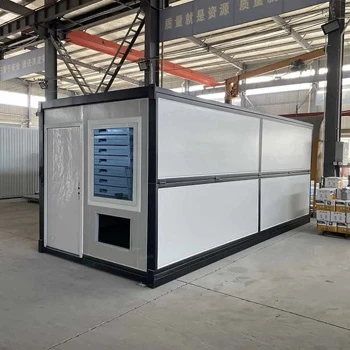
Expandable designs elegantly solve this logistical bottleneck. Through sophisticated structural hinges and modular engineering, an entire house can be compacted down into a tightly sealed, flat-pack profile. This allows multiple units to be securely loaded into a single standard 40-foot High-Cube shipping container. By drastically increasing the unit density per shipment, overseas buyers can effectively slash their per-unit transportation overhead. This logistical efficiency is a primary driver for procurement teams looking to maintain competitive retail pricing in their local markets while maximizing container space.
Evaluating Manufacturing Excellence Through Technical Parameters
When establishing a supply chain with an overseas factory, B2B buyers must rigorously evaluate the technical specifications of the product. Without relying on external certificates, the true quality, longevity, and safety of an expandable container house can be determined by examining its core engineering parameters. Top-tier manufacturers differentiate themselves through the following structural pillars:
1. Metallurgical Integrity and Steel Substructures
The backbone of any premium modular home is its framework. Industry-leading factories utilize heavy-duty, commercial-grade galvanized steel for the primary and secondary load-bearing structures. The galvanization process ensures deep resistance to oxidation, rust, and structural degradation, which is vital for units deployed in coastal or high-humidity environments. Buyers should prioritize factories that utilize thick-gauge steel profiles with precision-welded joints. A robust structural framework guarantees that the unit can withstand significant environmental stressors, including heavy dynamic roof loads (such as snow accumulation) and extreme wind shear, ensuring decades of reliable service.
2. Advanced Thermal Envelope and Fireproof Materials
Energy efficiency and occupational safety are paramount concerns for global buyers. Superior expandable container homes integrate high-density, fireproof sandwich panels for the roof, walls, and flooring. These advanced composite panels typically feature a resilient steel exterior wrapped around a core of specialized fire-retardant materials. This configuration serves a dual purpose. First, it acts as an exceptional thermal break, maintaining comfortable interior temperatures and minimizing HVAC energy consumption across diverse climates—from the extreme heat of the Australian outback to the freezing winters of Northern Europe. Second, the non-combustible nature of these materials prevents the propagation of flames, offering critical safety assurances for both residential and commercial applications.
3. Kinematic Design and Rapid Assembly Protocols
The defining characteristic of these structures is their “quick to build” functionality. However, the ease of assembly relies heavily on factory-level engineering. Premium units feature pre-calibrated kinematic hinges and heavy-duty folding mechanisms. A well-engineered unit allows a minimal on-site crew, often with nothing more than a standard crane or winch, to unfold the entire structure in a matter of hours. This rapid deployment eliminates the need for prolonged heavy machinery rentals and slashes site-preparation time.
4. Weatherproofing and Hermetic Sealing
Because the structure relies on folding seams, the quality of the joint sealing is what separates a standard product from a premium one. High-end factories utilize industrial-grade rubber gaskets, interlocking panel geometries, and heavy-duty sealants at every structural junction. When the house is fully expanded, these parameters ensure a completely hermetic seal, rendering the interior 100% waterproof, windproof, and resistant to pest intrusion.
Versatility in B2B Application Sourcing
The sheer adaptability of the expandable container house makes it an incredibly lucrative asset for distributors. Procurement teams are sourcing these units to fulfill diverse market demands, including:
- Residential Expansion: Accessory Dwelling Units (ADUs), granny flats, and rapid-deployment suburban housing.
- Commercial Infrastructure: Remote mining and construction site offices, agricultural worker accommodations, and scalable commercial workspaces.
- Emergency and Relief: Disaster recovery housing and rapid-response medical triage centers.
- Hospitality: Eco-tourism cabins, glamping resorts, and temporary event infrastructure.
Partnering with a factory that standardizes high-quality parameters ensures that a single product line can confidently serve all these diverse sectors.
Elevate Your Global Sourcing Strategy with Grande
Navigating the global manufacturing landscape requires partnering with a factory that intrinsically understands the rigorous demands of international engineering and logistics. If your procurement team is seeking a reliable, high-capacity manufacturer that excels in every technical parameter discussed, Grande stands ready as your premier strategic partner.
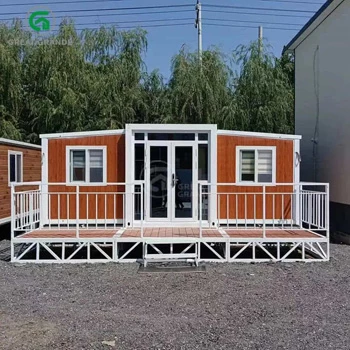
Le Grande 20ft Foldable Modular Home is meticulously engineered around a heavy-duty, anti-corrosive steel structure, ensuring uncompromising stability in the harshest environments. Recognizing the paramount importance of safety and energy efficiency, our units are constructed utilizing premium fireproof materials that deliver superior thermal and acoustic insulation. Designed specifically to optimize your B2B supply chain, our innovative folding mechanisms allow for maximal shipping density and a profoundly “quick to build” on-site experience, drastically reducing labor costs for your end-users.