





Table of Contents
Introduction to Cold-Weather Challenges in Container Housing
Space Efficiency and Mobility
Because it’s modular and portable, a folding container house works well in locations where traditional buildings aren’t practical. Whether it’s a remote job site, temporary housing project, or cold-region accommodation, this type of structure adapts easily.
Advanced Water Pipe Insulation Technology Explained
One of the standout features of our folding container house is its dedicated approach to water pipe insulation. Instead of treating pipes as an afterthought, they are protected from the start.
Why Water Pipes Freeze in Cold Environments
Pipes usually freeze when they’re exposed to low temperatures for long periods, especially if they run close to exterior walls or floors. Once water freezes, it expands. That pressure can damage pipes from the inside, often without warning.
Rubber and Plastic Insulation Materials
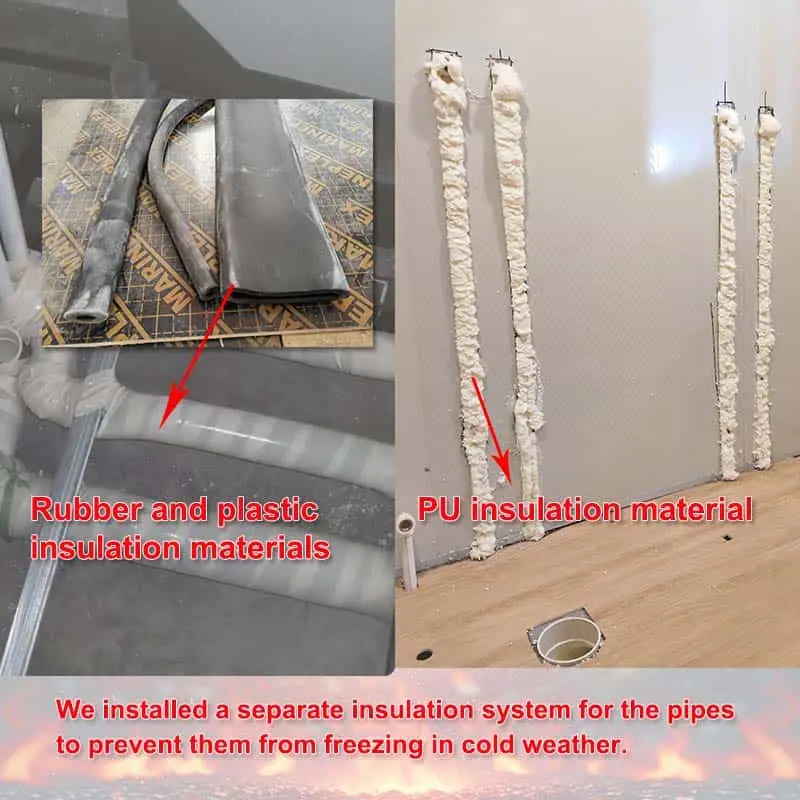
To prevent this, water pipes are wrapped with high-quality rubber and plastic insulation materials. These materials are chosen because they:
- Reduce heat loss effectively
- Stay flexible in cold conditions
- Provide consistent thermal protection
This layer helps slow down heat transfer and keeps cold air away from the pipes.
PU (Polyurethane) Foam Insulation System
On top of that, PU foam insulation is applied to further protect the pipes. PU insulation fills gaps and seals off areas where cold air might sneak in. Together, these materials create a strong, continuous barrier against freezing temperatures.
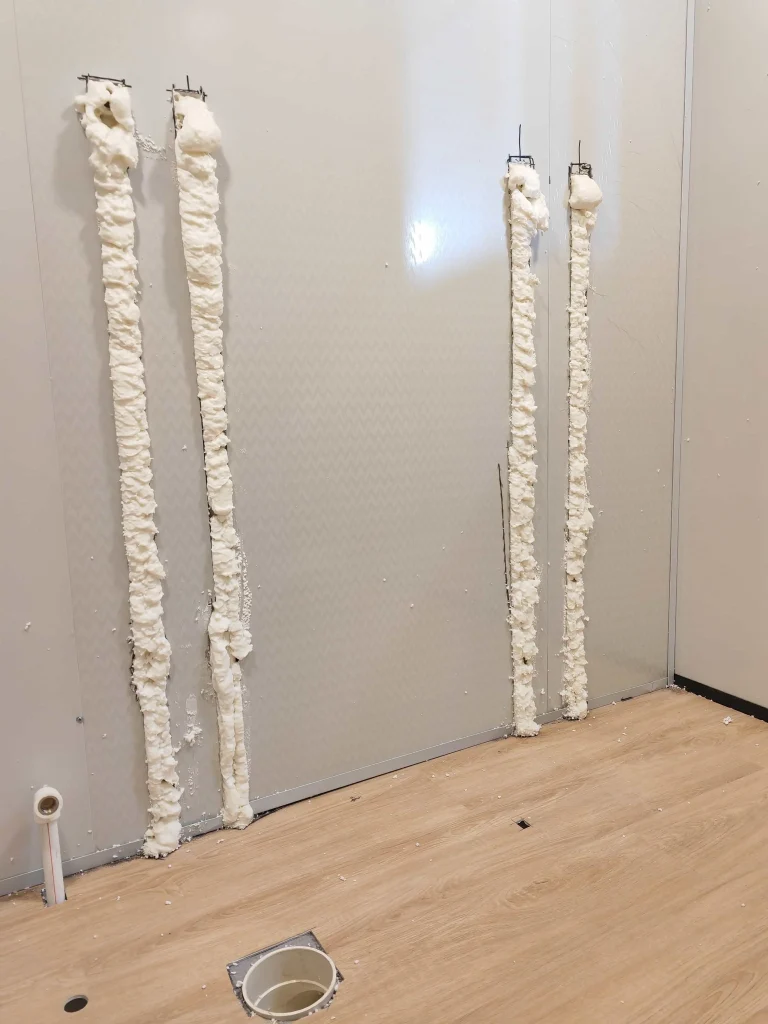
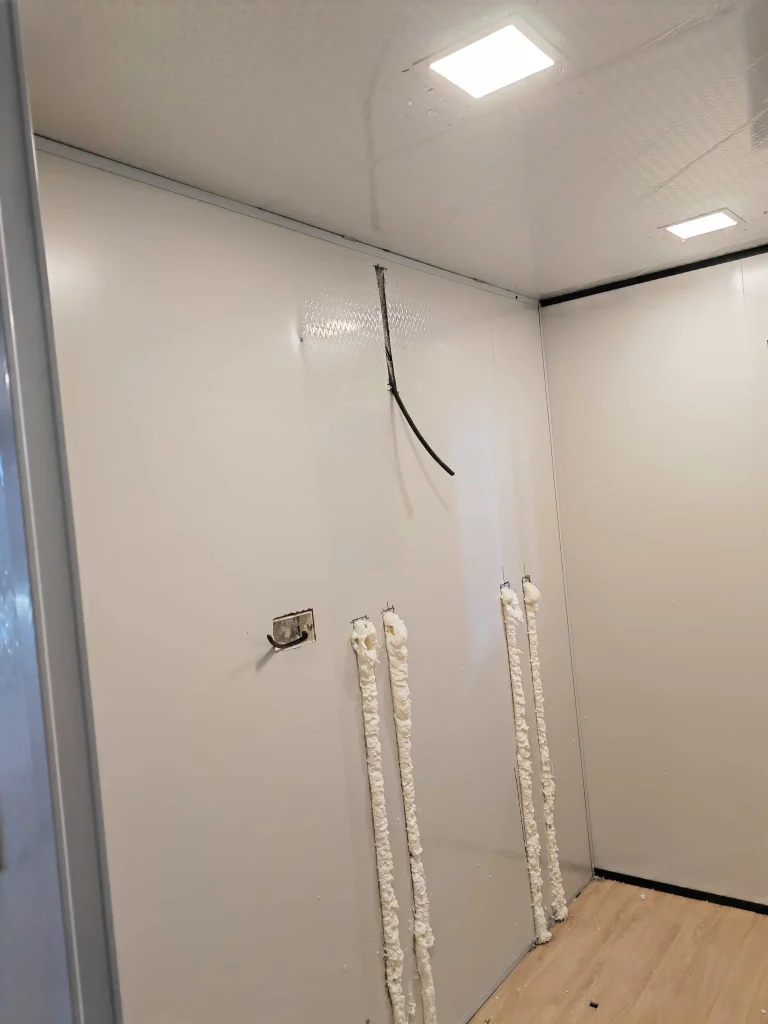
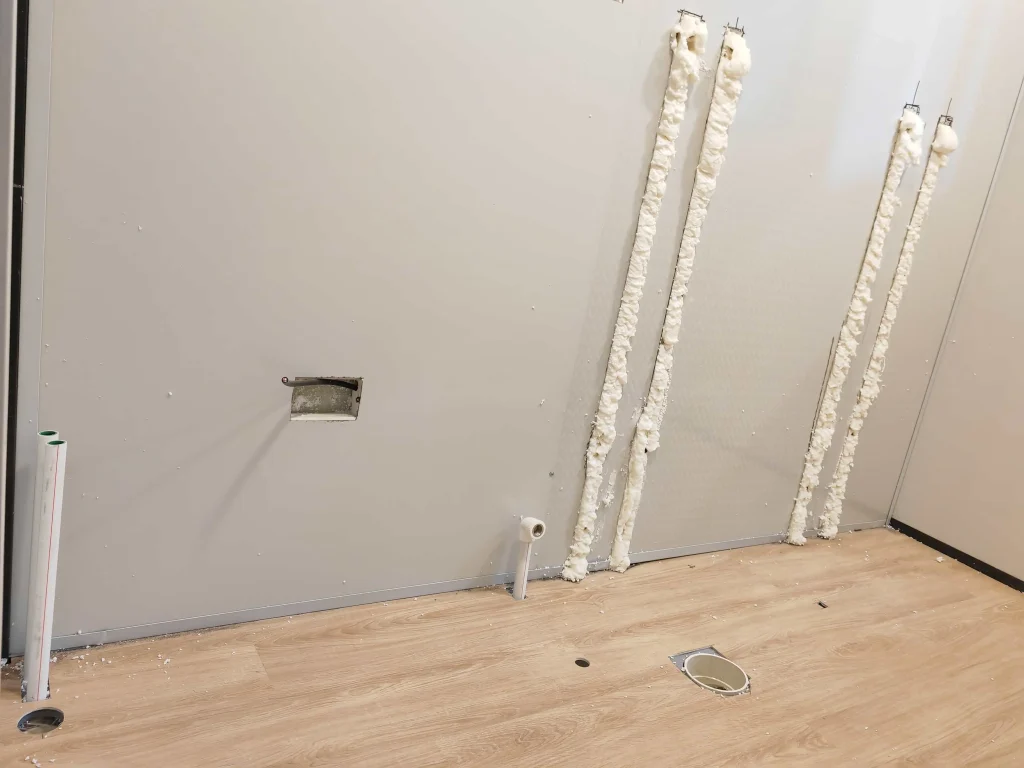
Separate Insulation System for Water Pipes
What really sets this folding container house apart is the fact that the water pipes use a separate insulation system, independent from the main wall insulation.
Independent Pipe Protection Design
Instead of relying only on wall insulation, the pipes are individually insulated. This extra step ensures that even if outside temperatures drop suddenly, the pipes stay protected.
Real-World Applications and Installation Scenarios
This folding container house is commonly used in places where reliable water systems are essential, such as:
- Cold-region worker accommodations
- Mining and energy project sites
- Temporary housing in winter climates
- Emergency or disaster relief shelters
In these situations, dependable insulation isn’t a luxury—it’s a necessity.
Comparison with Traditional Container House Insulation
Many traditional container houses rely mainly on wall insulation, leaving pipes more exposed than they should be. By comparison, our folding container house:
- Uses a dedicated pipe insulation system
- Offers better protection in cold environments
- Delivers more reliable performance over time
The difference becomes especially clear during harsh winters.
Environmental and Energy-Saving Advantages
Good insulation doesn’t just protect pipes—it also helps reduce heat loss. This leads to:
- Lower energy consumption
- Reduced heating costs
- Better overall energy efficiency
For more information on insulation and energy efficiency standards, you can refer to resources from the U.S. Department of Energy.
Frequently Asked Questions (FAQs)
- Why is pipe insulation important in a folding container house?
Because it prevents freezing, pipe damage, and water supply interruptions during cold weather. - What insulation materials are used for the pipes?
Rubber insulation, plastic insulation materials, and PU foam are used together for maximum protection. - Is the pipe insulation separate from wall insulation?
Yes. The water pipes are insulated independently for added reliability. - Can this folding container house be used in very cold regions?
Yes, it is specifically designed to perform well in cold climates. - Does pipe insulation increase maintenance costs?
No. In fact, it usually lowers maintenance costs by preventing pipe failures. - Is the insulation installed at the factory?
Yes. All insulation systems are pre-installed during production to ensure consistent quality.