





Table of Contents
Shifting from CAPEX to Total Cost of Ownership
For industrial project managers in the Middle East, procuring temporary housing is a major line item. When evaluating bids for a 500-person labor camp or a remote site office, the initial purchase price (CAPEX) often dominates the decision.
However, smart procurement looks at Total Cost of Ownership (TCO). While a standard Folding Container House might carry a slightly different price tag than a local makeshift shed, the savings in logistics, installation, and energy efficiency create a vastly superior ROI within the first 12 months. Here is a breakdown based on market data.
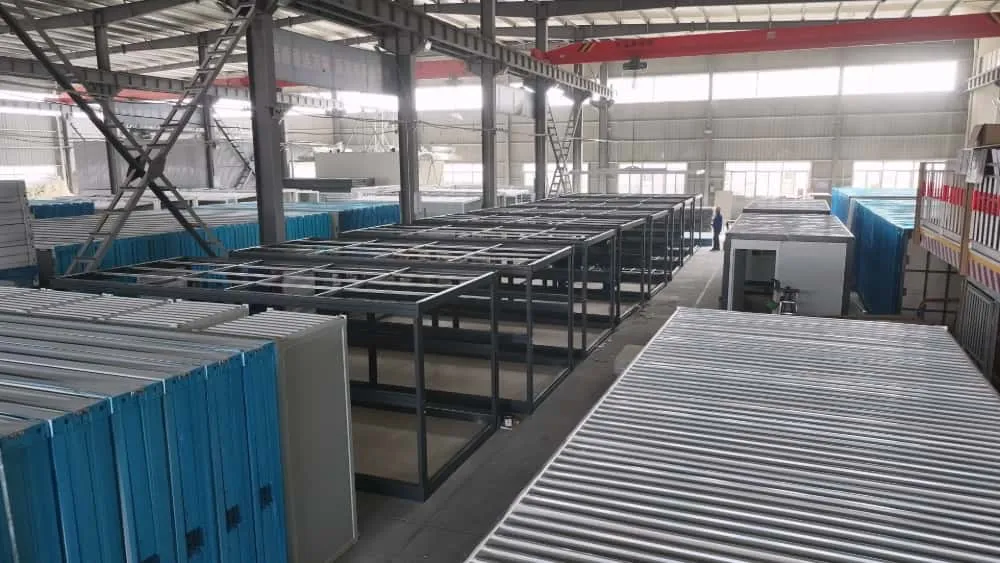
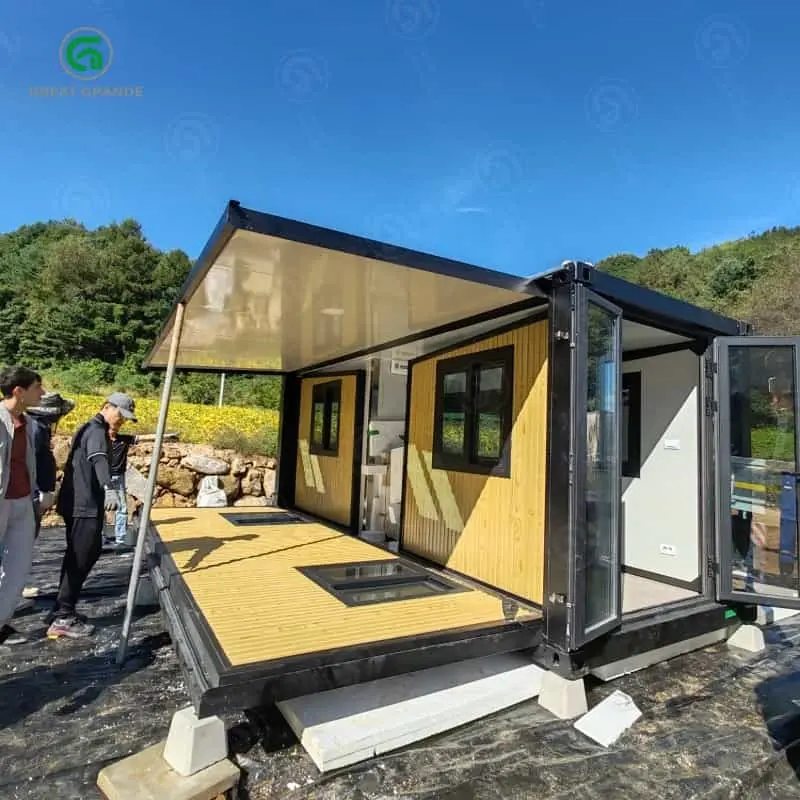
Logistics Efficiency: The “12-in-1” Advantage
The most immediate savings occur before the product even touches the ground. Shipping costs to ports like Jebel Ali or Jeddah fluctuate, but volume efficiency remains king.
Traditional Modified Container: A standard 40ft shipping container can only transport 2 fully assembled units (or 3-4 flat pack units depending on packaging).
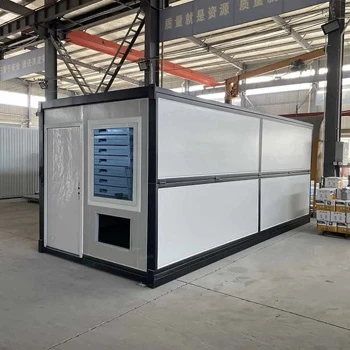
Folding Container House: Due to its 45cm folded height, a single 40HQ shipping container can load 10 to 12 units.
The Data: If ocean freight is approximately $6,000 USD (hypothetical market average), the logistics cost per unit for a traditional container is $3,000. For a folding house, it drops to just $500.
Result: You save 83% on ocean freight costs per unit immediately.
Installation Speed: Massive Labor Cost Reduction
Time is money, especially in the extreme heat of the Saudi or Qatari desert where labor efficiency drops.
Traditional Prefab/K-House: Requires a team of 6-8 skilled workers, on-site cutting, and assembly. A 20ft unit often takes 4-6 hours to finish.
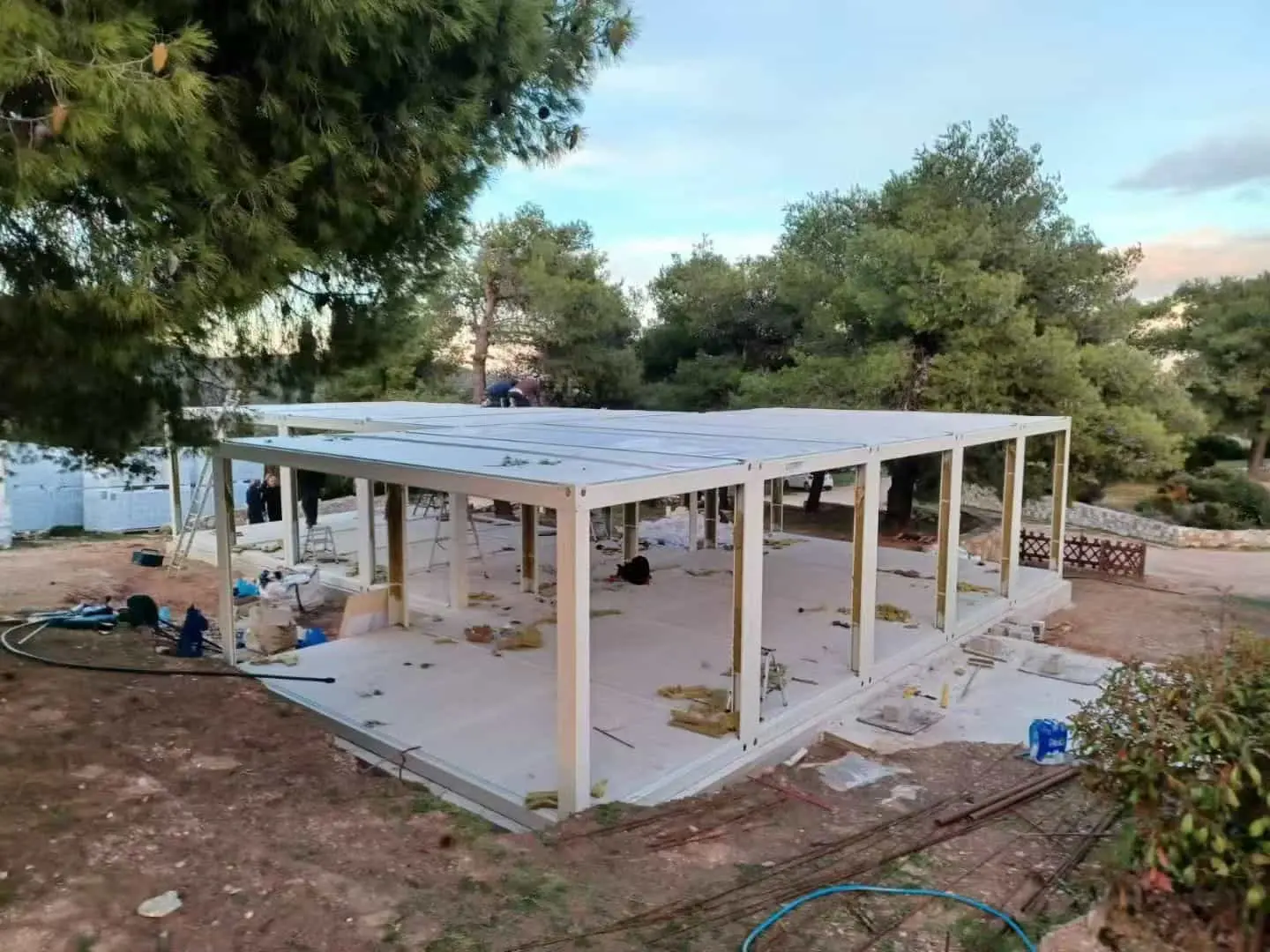
Folding Container House: Requires 1 crane operator and 4 general workers. The “unfold and fix” process takes just 4 to 10 minutes per unit.
The Data: To set up a camp of 100 units:
Traditional: 100 units × 5 hours = 500 labor hours.
Folding: 100 units × 10 mins = ~17 labor hours.
Result: A 96% reduction in installation time. This allows projects to become operational weeks ahead of schedule, reducing the “burn rate” of idle site management.
Operational OPEX: Energy Savings in 50°C Heat
In the Middle East, AC power consumption is the largest operational expense (OPEX). Cheap housing often uses 50mm low-density EPS, which leaks cool air rapidly.
Investing in a Folding House with 75mm Rock Wool or PU (Polyurethane) edges creates a thermal break.
The Data: Comparative studies suggest that upgrading from standard EPS to high-density insulated folding units reduces AC load by roughly 25-30%. If a standard AC unit consumes 1.5 kWh running 20 hours a day:
Daily Consumption: 30 kWh.
Saving: 9 kWh per day per unit.
Annual Saving: ~3,285 kWh per unit.
Result: Multiplied by commercial electricity rates, the energy savings alone can recoup the unit’s price difference within 18 months.
Asset Liquidity: Reuse and Relocation
The final factor in ROI is the asset’s end-of-life value. Traditional prefabs are often demolished or abandoned because dismantling them costs more than they are worth.
Folding Container Houses are Movable Assets.
Relocation Cost: When a project ends, 12 units can be folded back onto a single truck.
Storage: They occupy only 1/5th of the space in your warehouse when not in use.
The Smart Financial Choice
When you combine 83% lower freight costs, 96% faster installation, and 30% lower energy bills, the Folding Container House is not just a purchase; it is a high-yield investment.
For distributors and construction firms, choosing high-spec folding units (with galvanized frames and superior insulation) ensures that this asset generates value across multiple projects for 10+ years.